
Unveiling Chanakya: Debunking ‘Mythologist’ Devdutt Pattanaik & ‘Historian’ Ruchika Sharma
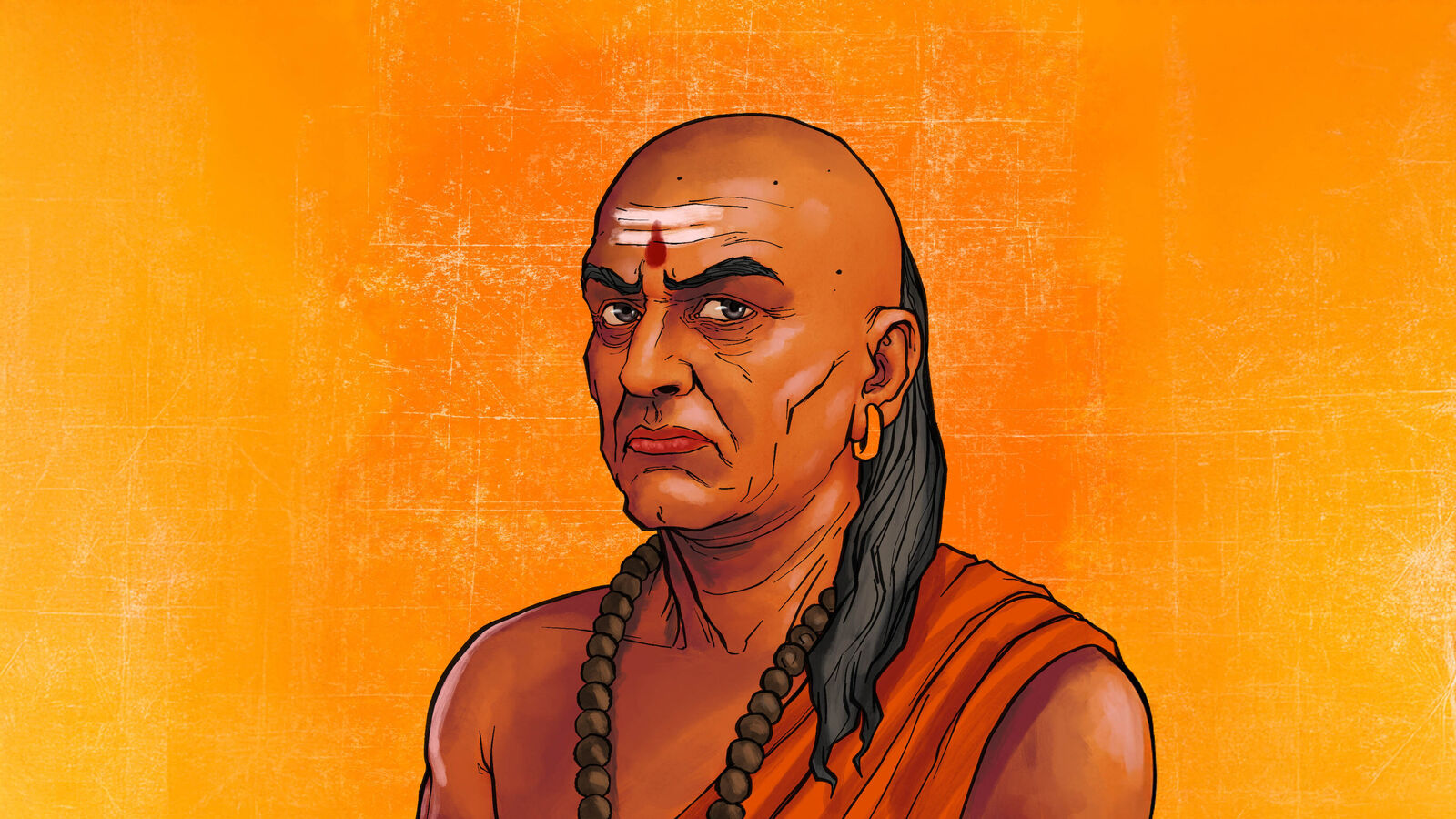
In recent times, the history of Chanakya has come under question. Is Chanakya a real Historical figure or just a myth created by Brahmins to glorify themselves? ‘Mythologist’ Devdutt Pattanaik has even written an article on the New Indian Express, arguing that Chanakya is a work of Fiction created by Brahmins. Additionally, the ‘historian’ Ruchika Sharma has advanced a similar argument, while also raising critical questions regarding the identification of Chanakya, Kautilya, and Vishnugupta as a single historical figure.
Let’s debunk this myth with historical evidence drawn from ancient sources across Buddhist, Jain, Greco-Roman, and Sanskrit traditions. This blog explores the multifaceted proofs that affirm Chanakya's historical footprint. Let's dive into the evidence, categorized for clarity.
Manuscript and Textual Evidences: The Core of the Arthashastra
R. Shamasastry’s discovery and translation of the Arthaśāstra manuscript between 1905 and 1915 firmly established the text’s historical depth. The oldest extant manuscript, discovered in Mysore and composed in Grantha script, predating the seventh century CE, underscores the work’s pre-medieval provenance. Philological reconstruction further reveals that the text comprises multiple compositional layers, with a foundational core dating to the early centuries BCE, as evidenced by linguistic archaisms absent in later standardized Sanskrit.
Shamasastry’s 1909 critical edition identified these archaic features as consistent with pre-Gupta Sanskrit usage, thereby reinforcing the argument for an early composition. This conclusion was substantially strengthened by R. P. Kangle’s comprehensive critical edition (1960–1965), which demonstrated that the Arthaśāstra’s administrative institutions correspond closely with Ashokan inscriptions of the third century BCE, its monetary references (such as pana and māṣaka) align with the Mauryan economic system, and its linguistic structures reflect an early stage of Sanskrit prose. Kangle consequently dated the core text to the Mauryan period or earlier.
Additional external corroboration is provided by the Spitzer Manuscript, dated to the first–second century CE and discovered in a Buddhist monastic context at Kizil in Xinjiang, which explicitly references the Arthaśāstra, thereby confirming its early circulation and authority. Internally, the text repeatedly attributes its compilation to “Viśnugupta, the noble Kautilya,” and concludes with the colophon “Here ends the Arthaśāstra of Kautilya,” establishing an explicit identification between Viśnugupta and Kautilya. When read alongside references to Chanakya as a patronymic designation, as well as variant names such as Dramila, Draumina, Viśamaśīla, and Anśula in related traditions, the evidence strongly supports a unified historical identity.
Few Arthashastra Verses:
“विष्णुगुप्तेन आर्यकौटिल्येन च सम्पादितम्” (“Compiled by Viśnugupta, the noble Kautilya”).
“समाप्तं कौटिलीयम् अर्थशास्त्रम्” (“Here ends the Arthaśāstra of Kautilya”).
Scholars, including Kangle, Thomas Trautmann, and Patrick Olivelle, further emphasize internal indicators, such as references to pre-Mauryan coinage, the absence of later Brahmanical caste codifications, and a form of Sanskrit prose predating Pāṇinian standardization, as evidence for dating the text before the third–fourth century CE. Additionally, historian K. P. Jayaswal’s interpretation of geographical terms such as Cīna as denoting Himalayan regions (including areas like Gilgit rather than Han China) clarifies the text’s early geopolitical context.
Taken together, manuscript evidence, linguistic analysis, internal attribution, and external references firmly situate the Arthaśāstra within the Mauryan era and substantiate its direct association with the historical Chanakya and his tradition of statecraft.
Inscriptions and Administrative Parallels
Ashokan inscriptions provide indirect yet compelling corroboration of the administrative systems described in the Arthaśāstra, suggesting the influence of Chanakya’s political thought on Mauryan governance. Edicts from the third century BCE reveal a highly developed bureaucratic structure, including organized intelligence networks, state-sponsored welfare measures, centralized mechanisms of revenue collection, specialized officials such as forest officers, port officers, and mining superintendents, as well as mahāmātras (senior administrators), welfare officials, regulatory policies concerning animal slaughter, and articulated principles of judicial ethics. These institutional features closely parallel those outlined in the Arthaśāstra.
F. W. Hultzsch’s Corpus Inscriptionum Indicarum, Volume I (1925), systematically documents these edicts and furnishes concrete epigraphic evidence for administrative practices that correspond to the polity envisioned in the Arthaśāstra. The extent of this convergence strongly indicates that the text reflects operative Mauryan statecraft rather than a retrospective or purely theoretical composition.
Buddhist Sources: Chronicles from Pali Traditions
Buddhist literary sources, preserved primarily in Pali and grounded in early oral traditions, consistently portray Chanakya as a significant historical figure in the establishment of the Mauryan dynasty. The Mahāvaṃsa, a Sri Lankan chronicle composed in the fourth–fifth century CE but drawing upon earlier Pali materials such as the Dīpavaṃsa and its Aṭṭhakathā (third–first century BCE), explicitly states: “The wise brahmin Cāṇakka installed the prince Candagutta in the kingdom.” This passage identifies Viṣṇugupta/Kautilya as the principal architect behind Chandragupta Maurya’s accession to power.
Similarly, the Mahābodhivaṃsa (twelfth century CE), while later in composition, preserves older Pali traditions and recounts that “the brahmin Chanakka slew the Nanda king and installed Chandagutta,” reinforcing the narrative of Chanakya’s decisive role in the overthrow of the Nanda dynasty. Further corroboration appears in the Divyāvadāna (second–third century CE), a Sanskrit Buddhist collection that includes accounts of Mauryan rulers such as Bindusara and Ashoka. These narratives reflect administrative practices comparable to those outlined in the Arthaśāstra and explicitly refer to Viṣṇugupta/Kautilya as Chandragupta’s mentor and political guide.
Collectively, these Buddhist sources, rooted in traditions associated with Pāṭaliputra, the Mauryan imperial capital, provide consistent and independent testimony affirming Chanakya’s historical role in the destruction of the Nanda regime and the establishment of Chandragupta Maurya’s rule.
Jain Sources
Jain literary traditions, developed independently of Buddhist sources, present parallel narratives that provide important cross-corroboration for Chanakya’s historical role. Hemachandra’s Pariśiṣṭaparvan (twelfth century CE), though composed later, is explicitly grounded in older Prakrit materials preserved within Jain monastic lineages associated with Pāṭaliputra, some of which can be traced to the early centuries CE. This work offers a detailed account of Chanakya’s strategic orchestration of the overthrow of the Nanda dynasty and the installation of Chandragupta Maurya.
Earlier Jain narrative literature likewise preserves core elements of this tradition. The Kathākośa (third–fourth century CE) recounts episodes central to the Chanakya cycle, including the defeat of the Nandas, while the Niśītha Cūrṇi, a Jain exegetical commentary, explicitly identifies Chanakya as the principal kingmaker responsible for Chandragupta’s rise to power.
Collectively, these Prakrit-based Jain accounts emphasize Chanakya’s political acumen and strategic ingenuity and, when read alongside Buddhist narratives, demonstrate a remarkable consistency across sectarian traditions. This convergence strongly supports the historicity of Chanakya as a central architect of the Mauryan political transformation.
Greco-Roman Sources
Accounts preserved by Greek and Roman authors provide valuable external corroboration for early Mauryan administrative practices, independent of indigenous literary traditions. Fragments of Megasthenes’ Indica, as transmitted through later classical writers, describe Chandragupta Maurya’s court as characterized by an extensive bureaucratic apparatus, organized espionage, and a council of ministers, features that closely correspond to the institutional frameworks articulated in the Arthaśāstra. These accounts are systematically compiled in J. W. McCrindle’s 1887 edition.
This convergence between Greco-Roman observations and indigenous political theory strengthens the argument that the Arthaśāstra reflects practical systems of governance operative during the Mauryan period and supports the view that Chanakya’s strategic doctrines were embedded in historical statecraft rather than later theoretical abstraction.
Literary and Dramatic Traditions
Later Sanskrit and regional literary works build upon earlier historical traditions and presuppose the historicity of Chanakya. The Mudrārākṣasa, a Sanskrit political drama conventionally dated to the fifth century CE, dramatizes Chanakya’s diplomatic and strategic maneuvers during the establishment of Mauryan rule, presenting him as a historically grounded political actor rather than a mythical figure.
Similarly, the Kāmāṇḍakīya Nītiśāra (fourth century CE), attributed to Kāmāṇḍaki, explicitly identifies Viṣṇugupta/Kautilya as the author of the Arthaśāstra and credits him with orchestrating the overthrow of the Nanda dynasty in favor of Chandragupta Maurya. The text thus situates Chanakya firmly within a continuous lineage of political theory and praxis.
In addition, the Kashmiri Tantrākhyāyikā tradition preserves “Chanakya” as the paradigmatic exemplar of political strategy and statecraft, reflecting his enduring cultural and intellectual presence in Indian political imagination. Taken together, these later works do not introduce Chanakya as a speculative figure but rather assume and reinforce an already established historical consensus regarding his role in the Mauryan transition.
Conclusion
Piecing together this evidence, from the Arthashastra's manuscripts and internal attributions to cross-cultural sources in Buddhist, Jain, and Greco-Roman traditions, reveals Chanakya as a flesh-and-blood figure of the Mauryan era. The administrative matches with Ashokan inscriptions, philological dating to pre-Gupta Sanskrit, and consistent narratives across independent traditions dispel any notion of him being a mere legend. Instead, they portray a brilliant mind who shaped one of ancient India's greatest empires. The names Viśnugupta is a personal name, Kautilya is gotra/scholarly name, Chanakya is patronymic, and additional variants like Dramila, Draumina, Vishamashila, and Anśula. For history enthusiasts, delving into these primary sources offers a fascinating glimpse into how ancient wisdom endures through rigorous scholarship.
