
State Control of Hindu Temples
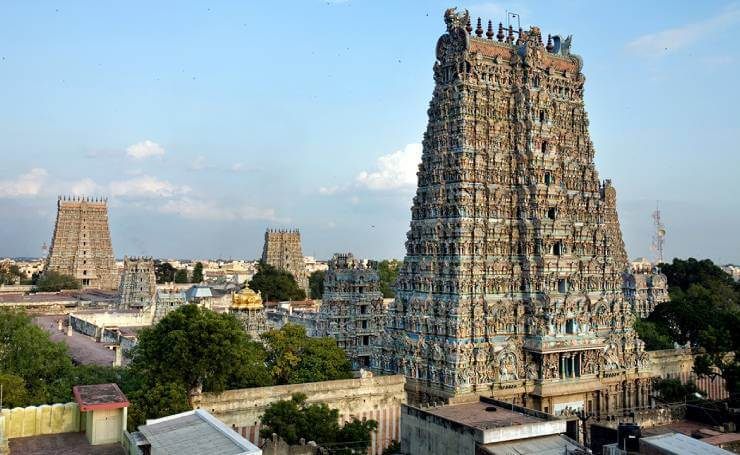
“State Control of Hindu Temples and their property is by far the largest, financially most damaging scam of independent India.” — Dr. Anand Ranganathan
BJP, the so-called Hindu party, after being in power for more than 12 years, couldn’t free the Hindu temples from state control. For millennia, Hindu temples have served as pivotal hubs of worship, scholarship, communal life, commerce, and economic activity, while also influencing statecraft and defense. The state’s control over these temples and their assets represents perhaps the most egregious and financially ruinous ‘scandal’ of independent India. In the history of Bharat, every invader has understood that to undermine India, one must first disrupt this intricate temple ecosystem. Let’s dig into the history, present, and future of the State Control of Hindu Temples.
Glimpse of History
Historically, in the Pre-Colonial Era, Hindu temples were managed by local communities, guilds, trusts, and royal patrons. Kings (such as the Cholas or Vijayanagara rulers) endowed temples with vast lands and wealth, but day-to-day administration was largely decentralized. This was one of the reasons why Islamic Invaders made temples their prime target to vandalize, loot, and annihilate the Bharatiya culture. Historically, several invading powers appear to have recognized that weakening India’s institutional and cultural foundations required disrupting its temple-centered socio-religious ecosystem. In many cases, temples, being not only religious centers but also hubs of education, economy, and community life, were targeted or brought under external control. Beginning in the mid-nineteenth century, the British colonial administration gradually altered its approach toward the governance of Hindu religious institutions. From around 1840 onward, steps were taken to reduce direct governmental management of temples in the Madras Presidency. In several instances, prominent mutts (monastic institutions) in what is now Tamil Nadu were entrusted with the administration of major temples and shrines. These transfers were often formalized through written undertakings or “muchalikas,” which sought to define the scope of authority and protect the managerial position of the mutts. Under such arrangements, certain mutts exercised substantial control over temple administration and, according to supporters, managed these institutions in accordance with religious objectives, ritual requirements, and maintenance needs.
The documentary version runs ten minutes: from the Raj's 1817 regulations to the present, and the legal machinery that put temple money under state control.
However, beyond these select cases, many other temples across the Madras Presidency were placed under various trustees, with limited systematic oversight. This evolving regulatory environment culminated in legislative interventions such as the Madras Hindu Religious Endowments Act, 1925 (Act I of 1925). Following legal challenges to its validity, it was replaced by the Madras Hindu Religious Endowments Act, 1926 (Act II of 1927). Over the next two decades, the statute underwent multiple amendments, reflecting continued governmental engagement in temple administration.
A significant expansion of regulatory authority occurred with Act XII of 1935, which introduced Chapter VI-A. This amendment empowered the statutory Board to “notify” temples and assume administrative control under defined circumstances. It can be argued that this marked a decisive shift toward centralized oversight, enabling the Board to intervene in temple governance more extensively than before. Notably, controversies arose in relation to temples such as the Chidambaram Nataraja Temple, where notification proceedings were initiated despite earlier governmental and judicial directions emphasizing procedural restraint.
The British colonial administration, positioning itself as a custodian of public order and property, established a bureaucratic framework to audit temple finances, appoint executive officers, and oversee the general administration of major temples. This model was not merely an administrative convenience but reflected a colonial perspective that often viewed indigenous religious institutions as requiring rational, Western-style management to function properly.[1]
The Hindu Religious and Charitable Endowments Act, 1951, was promptly challenged before the Madras High Court and later before the Supreme Court of India. In the landmark The Commissioner, Hindu Religious Endowments, Madras v. Sri Lakshmindra Thirtha Swamiar of Shirur Mutt decision (the Shirur Mutt case), the Supreme Court struck down several key provisions of the Act, holding that they violated the constitutional protections guaranteed to religious denominations under Articles 25 and 26. The Court made it unequivocally clear that while the State may regulate secular aspects of religious institutions, it cannot assume control in a manner that destroys denominational autonomy or interferes with essential religious practices.
Despite this emphatic judicial rebuke, the then Congress-led government responded not by withdrawing from the regulatory domain, but by introducing fresh legislation in the form of a revised Hindu Religious and Charitable Endowments Act. It can be argued that this legislative move reflected a determination to retain administrative control over Hindu religious institutions, albeit within the narrower constitutional boundaries articulated by the Court. The episode thus illustrates an enduring tension between constitutional guarantees of religious autonomy and the State’s continued assertion of supervisory authority over temple administration.
One must ask if the Congress can bring in legislation to control Hindu temples, one that still stands, why cannot the present “Pro-Hindutva” government bring in legislation to free Hindu temples?
A petition filed by Swami Parmatmananda and Swami Dayananda Saraswati in 2012 remains pending. The petition has remained pending before the Supreme Court of India for well over a decade. While the Court has, on occasion, convened urgent or late-night hearings in matters deemed exceptionally pressing, such as capital punishment cases, the continued delay in adjudicating issues involving religious freedom and denominational autonomy raises serious concerns about constitutional prioritization. They argue that questions implicating Articles 25 and 26, which concern fundamental rights, deserve comparable urgency.
In his Public Interest Petition, Swamiji cited the example of the Ardhanareeswarar Temple in Tiruchengode. Despite reportedly generating annual revenues exceeding one crore rupees, only a small fraction, approximately a few lakhs, is allocated for daily puja, ritual performance, and core religious activities.[2] This disparity illustrates the broader concern that while temples generate substantial income, the funds are not proportionately reinvested into their primary religious and cultural functions. Such examples are invoked to argue that prolonged judicial inaction, combined with administrative control over temple finances, has tangible consequences for the preservation of ritual integrity and institutional autonomy. Swami Dayananda Saraswati did not live to witness the resolution of the constitutional struggle he had initiated concerning the autonomy of Hindu temples. He passed away in 2015, before the realization of what he and his supporters regarded as the restoration of temple administration to the religious community. For his followers, his death symbolized not merely a personal loss but the unfinished state of a broader movement seeking to redefine the relationship between the State and Hindu religious institutions.
Constitutional laws and the Hindu temples
Under the Constitution, India is described as a secular State, signifying a constitutional commitment to neutrality and impartiality toward all religions. Secularism in the Indian context implies that the State is primarily concerned with regulating relations among individuals and institutions in the public sphere, rather than adjudicating matters concerning the relationship between an individual and the divine, which fall within the domain of personal conscience. Accordingly, the State is expected to treat all religions and religious denominations with equal respect, ensuring equality before the law and non-discrimination in matters of faith and worship. While the Constitution permits regulatory intervention in secular aspects associated with religious practice, it does not sanction arbitrary interference in matters of individual belief or core religious doctrine.[3]
The concept of secularism originated in the European historical context, particularly in response to prolonged conflicts between ecclesiastical authorities and emerging nation-states. In its early development, secularism primarily signified the limitation of institutional Church authority over the functions of the State. It sought to prevent clerical dominance in political governance rather than to eliminate religion from public life altogether. In many European societies, even after the formal separation of Church and State, the broader cultural and civilizational identity of the State remained predominantly Christian. Thus, early secularism did not necessarily imply a complete detachment of religion from society, but rather a redefinition of the institutional boundaries between religious and political authority.[4] This topic warrants separate and detailed examination for another day.
Coming back to the Indian Constitution, the constitutional framework of India does not recognize any “State religion”. The State is neither empowered to establish a religion of its own nor to extend preferential patronage to any particular faith. This principle of secular governance gives rise to certain constitutional limitations.
First, under Article 27 of the Constitution of India, the State is prohibited from compelling any citizen to pay taxes specifically appropriated for the promotion or maintenance of any particular religion or religious denomination.
Second, Article 28(1) of the Constitution of India provides that no religious instruction shall be imparted in any educational institution wholly funded by the State.
Together, these provisions reflect the constitutional commitment to religious neutrality while safeguarding individual freedom of conscience and belief.
Under Article 25 of the Constitution of India, everyone is free in conscience and free to profess, practice, and propagate religion. The clause (2) clarifies that nothing in this Article shall invalidate existing laws, nor preclude the State from enacting legislation in specified areas. In particular, the State retains the authority in:
(a) to regulate or restrict economic, financial, political, or other secular activities that may be associated with religious practice; and
(b) to enact laws promoting social welfare and reform, including measures to ensure that Hindu religious institutions of a public character are accessible to all classes and sections of Hindus.
This clause reflects the constitutional distinction between matters of essential religious practice, which are protected, and secular or reform-oriented aspects connected with the Hindu religion, which remain subject to legislative regulation in the interest of social justice and public order within the Hindu religion only.[5]
A point of constitutional debate arises from the wording of Article 25(2)(b), which specifically refers to the State’s power to enact laws providing for social welfare and reform for Hindus. An argument can be made that the explicit reference to Hindu institutions, without parallel textual mention of institutions belonging to other religions, such as Christianity or Islam, creates an appearance of asymmetrical treatment for the Hindus.
However, constitutional interpretation and judicial precedent have generally viewed this clause in light of historical social reform movements, particularly those aimed at addressing caste-based exclusion within Hindu society. Moreover, Articles 25 and 26 extend religious freedom protections to all denominations, subject to public order, morality, and health. The debate, therefore, centers not merely on textual differentiation but on whether legislative and administrative practices result in substantive inequality in the regulation of religious institutions across different faiths. The question of “bias” thus remains a matter of constitutional interpretation, policy analysis, and comparative examination of how religious institutions of different communities are regulated in practice.
A serious constitutional concern arises from the manner in which Article 25(2)(a), which authorizes the State to regulate the economic, financial, political, and other secular activities associated with religious practice, has been implemented in practice. Although the provision is textually religion-neutral, its operational enforcement has disproportionately affected Hindu religious institutions, particularly temples, which are subject to extensive state control in matters of administration and finance.
This asymmetrical application raises substantial questions regarding constitutional equality under Article 14 and the equal guarantee of religious freedom under Articles 25 and 26. If regulatory intrusion into the secular dimensions of religious institutions is applied selectively rather than uniformly across all faiths, it risks undermining the principle of state neutrality that forms the cornerstone of Indian secularism. The issue, therefore, is not merely administrative but constitutional: whether a secular State can justify a framework in which one community’s institutions remain structurally subject to deeper and more sustained governmental control than others. How could a state have jurisdiction over only Hindu temples and not other religious sites of worship in a supposedly "secular" country?
Why Free Temples?
The argument for freeing temples from state control rests on the premise that community-managed institutions are better positioned to realize their full spiritual, cultural, and social potential. When administered by worshippers and local stakeholders, temples may be maintained with greater care, accountability, and devotion. Religious institutions across India demonstrate diverse operational models; for instance, gurdwaras such as those of the Golden Temple tradition operate large-scale langar systems that provide free meals to thousands daily, reflecting how faith-based institutions can serve broader social welfare functions. One can argue that Hindu temples, if granted administrative and financial autonomy along with adequate land and budgetary control, could similarly allocate substantial resources toward community service, disaster relief, public health crises, and social outreach.
Given their deep-rooted presence within local communities, temples may, in certain contexts, respond to emergencies, such as epidemics, earthquakes, or coastal disasters, more swiftly and directly than centralized state mechanisms, where financial allocations often move through layered bureaucratic channels. Beyond their religious function, temples are repositories of art, architecture, history, and civilizational memory. In states such as Tamil Nadu, temple architecture forms an integral part of cultural identity, and numerous “temple towns” across India have historically developed with the temple as their socio-economic nucleus. Temple tourism itself constitutes a significant contributor to regional economies.
At the same time, the proposal to free religious institutions from state oversight presents both opportunities and risks. While autonomy may empower communities and enhance accountability to devotees, there also exists the possibility of mismanagement, factional control, or corruption if robust governance mechanisms are not established. Therefore, any transition from state-administered to community-administered structures would require careful institutional design, transparent financial systems, and independent oversight frameworks to prevent abuse.
Advocates further argue that democratic engagement is central to this issue. Citizens, as voters, may legitimately articulate their expectations regarding religious administration during electoral processes and seek policy commitments from political parties. However, reform of temple governance would likely need to occur in phased stages, potentially through the establishment of an independent statutory commission tasked with overseeing the gradual transfer of administrative authority to accountable community bodies. Ultimately, the debate engages broader constitutional principles: the balance between secular governance and religious autonomy, equality among faith communities, and the extent to which, decades after independence, citizens should exercise greater direct control over institutions central to their faith and cultural heritage.
These programs can counter the material incentives offered by missionary groups. For example, temples could establish schools teaching both modern subjects and Vedic knowledge, fostering pride in Hindu heritage while addressing practical needs. Autonomous temples can revive their role as cultural and spiritual centers by hosting festivals, discourses, and traditional arts. This strengthens community bonds and reinforces Hindu identity, making conversions less appealing. Temples like the Tirumala Tirupati Devasthanams, which enjoy relative autonomy, demonstrate how effective management can sustain cultural influence and fund charitable activities. Missionary conversions often target socio-economically disadvantaged groups, exploiting their lack of access to resources. Autonomous temples can directly address these vulnerabilities by providing social services and reducing reliance on external organizations. Additionally, temples can promote interfaith dialogue and educate communities about their heritage, countering narratives that portray Hinduism as backward or oppressive. 10 state governments are reported to exercise control over 110,000 Hindu temples. Tamil Nadu Temple Trust owns 478,000 acres. The scale of such control raises serious constitutional questions about religious autonomy and equal treatment under the law.
The Tamil Nadu government controls 36,425 Temples and 56 Mutts.[6] Karnataka controls over 35,500 temples.[7] Kerala controls over 3,000 temples.[8]
Endnotes
[1] SUTTON, D. (2012). Devotion, Antiquity, and Colonial Custody of the Hindu Temple in British India. Modern Asian Studies, 47(1), pp.135–166.
[2] Dr. Anand Ranganathan, ‘Hindus in Hindu Rashtra’, p.4.
[3] Dara Singh v. Republic of India, (2011) 2 SCC 490 (531).
[4] Jakob De Roover, ‘Europe, India, and the Limits of Secularism’, (2015).
[5] In Article 25, Explanation II.—In sub-clause (b) of clause (2), the reference to Hindus shall be construed as including a reference to persons professing the Sikh, Jaina, or Buddhist religion, and the reference to Hindu religious institutions shall be construed accordingly.
[7] https://www.thenewsminute.com/karnataka/karnataka-govt-wants-free-temples-what-exactly-159765
[8] https://www.shankariasparliament.com/interviews/upsc-interview-topics/travancore-devaswom-board-41
