
The Prime Ministers Who Betrayed the Nation
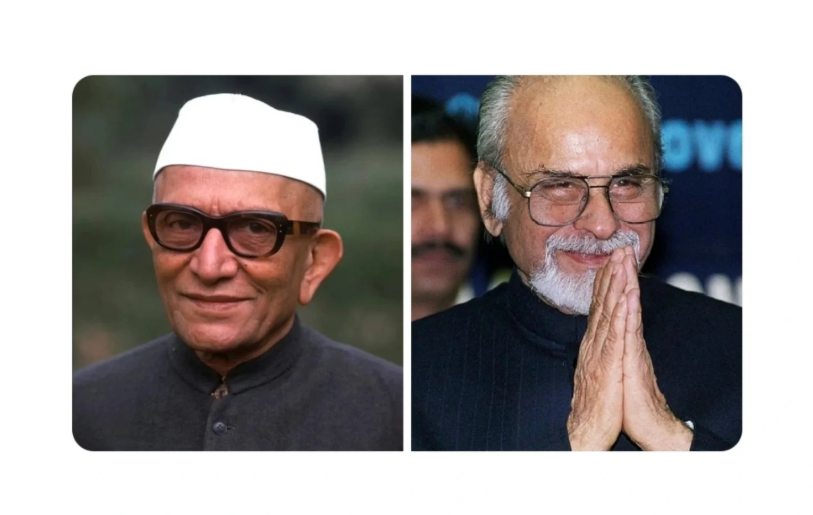
India's Research and Analysis Wing (RAW), established in 1968, serves as the country's primary external intelligence agency, responsible for gathering foreign intelligence, counter-terrorism, and covert operations to safeguard national interests. Two Prime Ministers, Morarji Desai (1977–1979) and Inder Kumar Gujral (1997–1998), oversaw significant reductions in RAW's capabilities, particularly its operations targeting Pakistan. Critics have labeled these moves as a profound betrayal of the country, arguing they compromised India's ability to monitor existential threats like Pakistan's nuclear program and cross-border terrorism, with lasting repercussions.
Morarji Desai's Tenure: Budget Cuts, Suspicion, and the Fatal Disclosure
After the Emergency, the Janata Party government under Morarji Desai viewed RAW with deep suspicion, associating it with Indira Gandhi's intelligence apparatus used for domestic political surveillance. Desai reportedly described RAW as Gandhi's “praetorian guard” and moved to curtail its activities.
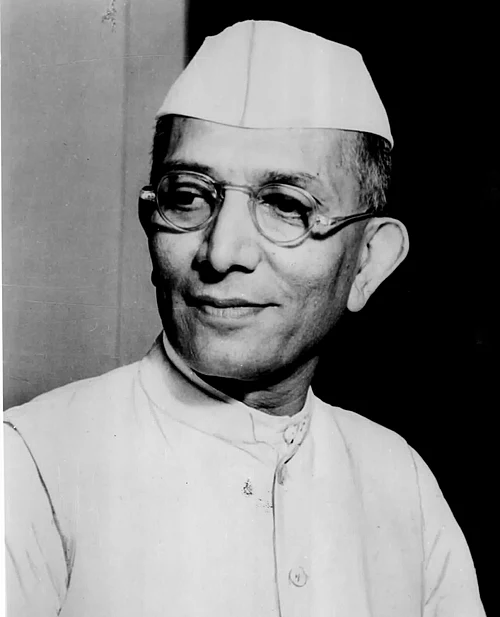
Morarji Ranchhodji Desai (29 February 1896 – 10 April 1995) was an Indian politician and independence activist who served as the prime minister of India between 1977 and 1979 leading the government formed by the Janata Party. During his long career in politics, he held many important posts in government such as the chief minister of Bombay State, the home minister, the finance minister, and the deputy prime minister.
In 1977, the agency faced dramatic cuts in operations, staff, and budget. Entire sections, such as the Information Division, were shut down, hurting RAW's overall capabilities. Legendary founder R.N. Kao was sidelined, and the budget was reportedly reduced significantly (some accounts cite up to 30%).[1]
The most damaging incident occurred in a 1978 telephone conversation between Desai and Pakistan's President (and military dictator) Zia-ul-Haq. Desai informed Zia that India was aware of Pakistan's covert nuclear weapons program at Kahuta (part of the broader enrichment activities). According to accounts, this indiscreet revelation, possibly stemming from a desire for transparency or flattery in bilateral talks, alerted Pakistan. [2]
Acting on the tip-off, Pakistan's ISI and military hunted down and eliminated most of RAW's assets in and around Kahuta. Agents were captured, executed, or vanished, effectively dismantling years of painstakingly built human intelligence networks monitoring Pakistan's nuclear ambitions. Desai was also reportedly averse to RAW penetration in Bangladesh.[3]
Former RAW officer B. Raman detailed aspects of this in The Kaoboys of R&AW: Down Memory Lane, noting the exposure and its fallout, though the exact repercussions for agents’ lives are debated in some analyses.
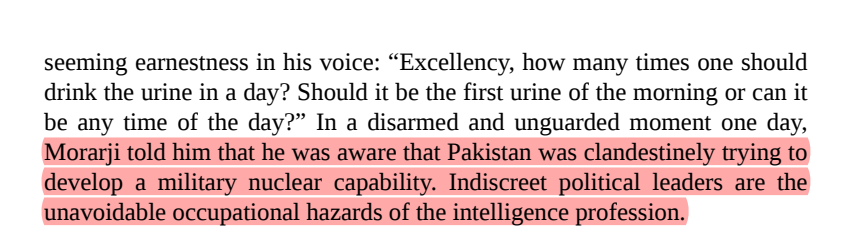
The Kaoboys of R&AW: Down Memory Lane, pdf p.89.
I.K. Gujral and the Gujral Doctrine: Goodwill at the Cost of Intelligence
I.K. Gujral, who served briefly as PM (1997–1998) after earlier stints as External Affairs Minister, is best known for the Gujral Doctrine. This five-point policy emphasized unilateral goodwill and non-reciprocal confidence-building measures toward India's neighbors, particularly to isolate Pakistan diplomatically.
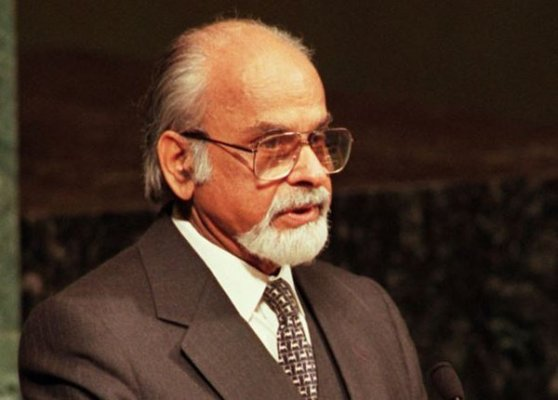
Inder Kumar Gujral (4 December 1919 – 30 November 2012) was an Indian diplomat, politician, and anti-colonial independence activist, who served as prime minister of India from April 1997 to March 1998.
In practice, this extended to scaling back offensive intelligence operations. During Gujral's tenure, RAW's special operations desk/counter-intelligence teams focused on Pakistan (CIT-X targeting Pakistan generally, and another on Khalistani infrastructure) were dismantled or shut down. The extensive human intelligence network in Pakistan was scaled down or systematically erased over roughly 11 months.[4] Former RAW/IB officers, including R.K. Yadav, described Gujral having a "serious allergy to RAW," leading to suspension of all offensive ops in Pakistan and instructions for IB to ease up on Pakistani agents in India. This was explicitly to promote his peace doctrine.[5] These covert groups, credited with checking ISI activities and helping end the Khalistani insurgency, were never fully restarted.
The Cost to National Security: A Betrayal of India's Interests?
These decisions had severe consequences. Desai's revelation delayed India's insights into Pakistan's nuclear program (Pakistan tested in 1998), allowing it to accelerate development while RAW networks were purged. Gujral's dismantling created major intelligence gaps in Pakistan just before the 1999 Kargil War. Analysts and media blamed the lack of deep assets for the "intelligence failure" that allowed Pakistani intruders to occupy heights undetected initially. Defence Minister Manohar Parrikar later alluded to a former PM compromising "deep assets," widely interpreted as referring to Gujral's actions under the Doctrine.[6] These were not mere policy missteps but acts amounting to betrayal: weakening the nation's first line of defense against a hostile neighbor actively building nuclear weapons, supporting terrorism, and infiltrating India. Intentions of peace and moral foreign policy clashed with the reality of asymmetric threats from Pakistan's ISI, which continued operations unabated.
[1] https://swarajyamag.com/magazine/how-we-killed-the-kaoboys
[2] https://www.newindianexpress.com/magazine/2013/Oct/06/the-failures-523422.html
[3] https://www.dailyo.in/politics/morarji-desai-kargil-war-pervez-musharraf-pakistan-raw-kahuta-nuclear-warfare-3802
[4] https://timesofindia.indiatimes.com/home/sunday-times/deep-focus/why-indian-intelligence-doesnt-work-too-well-in-pakistan/articleshow/12577068.cms
[5] https://www.newindianexpress.com/magazine/2013/Oct/06/the-great-betrayal-523409.html
[6] https://www.ndtv.com/india-news/defence-minister-manohar-parrikar-meant-ik-gujral-in-former-pms-bombshell-sources-731629
