
The Morya We Keep Calling but who is he?
Written by Abhishek IyengarEvery Ganesh Chaturthi, the sound rises almost instinctively from the streets: “Ganapati Bappa Morya!”
We shout it while bringing Ganesha home. We shout it while carrying Him through crowded streets. We shout it when the idol is immersed. For generations, the words have been so familiar that we rarely stop to ask a simple question:
Who is Morya?
Ganapati, of course, is Lord Ganesha. Bappa is an affectionate expression for the Lord—our father, our beloved one. But Morya is not another name for Ganesha.
Morya is Morya Gosavi, the great devotee of Ganesha.
And that small fact makes the chant far more beautiful than we may have imagined.
Morya Gosavi is remembered in tradition as a saint whose life was deeply devoted to Ganesha. He is associated particularly with Morgaon and Chinchwad in Maharashtra, where his legacy continues to live in the worship of Ganesha.
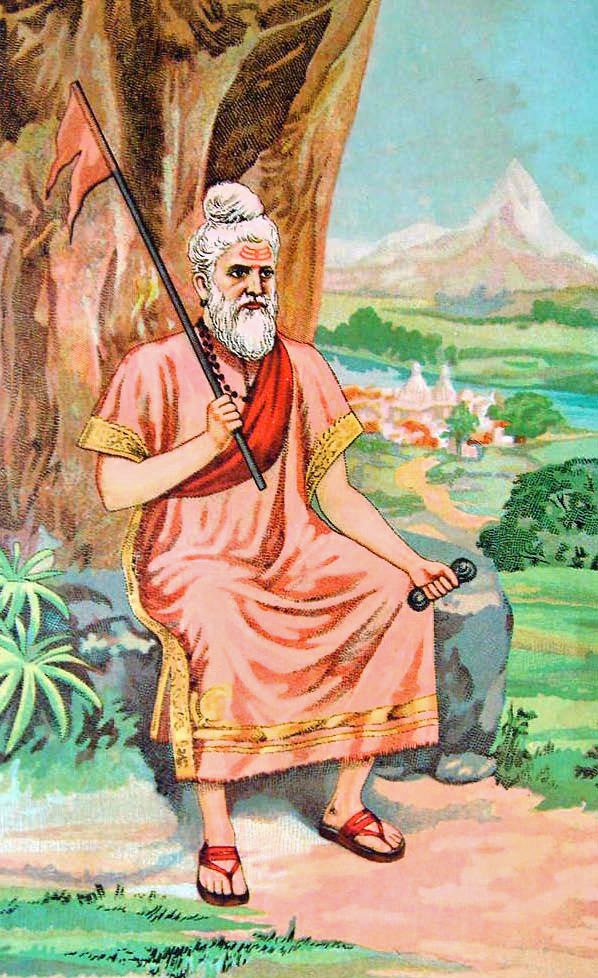
But perhaps the most remarkable thing is not who Morya Gosavi was. It is what happened to his name.
A devotee became part of a prayer.
Think about that for a moment.
We generally call upon God and ask for His blessings. But in this ancient cry, the name of a devotee follows immediately after the name of the deity. God and devotee are remembered together. It is almost as if the tradition is telling us that true devotion can become so powerful that the devotee himself becomes part of the way generations remember God.
That is a profoundly Indian idea.
Our civilisation has never treated spirituality merely as a relationship between man and God. It has also celebrated the relationship between the bhakta and Bhagavan. The devotee's surrender, love and faith become worthy of remembrance in their own right.
Morya's story therefore gives a different meaning to the familiar festival cry.
When we say “Ganapati Bappa”, we call upon the divine.
When we say “Morya”, we remember the human being who showed what complete devotion could look like.
There is also something wonderfully democratic about this memory. Morya Gosavi was not remembered because he commanded an empire, accumulated wealth or conquered territory. He was remembered because of bhakti. Centuries later, his name travels through cities, villages and generations—not in history textbooks, but on the lips of ordinary people.
And perhaps that is why the chant has survived so powerfully.
Festivals change. Cities change. Generations change. The way we celebrate changes. Yet when Ganesha arrives, the same words return.
Ganapati Bappa Morya.
It is not merely a slogan.
It is a tiny piece of history disguised as a festival cry. It carries within it the memory of a saint, the philosophy of devotion and the extraordinary Indian belief that the distance between the divine and the devotee can become almost invisible.
The next time we hear thousands of voices shouting “Ganapati Bappa Morya,” perhaps we should pause for a second.
Behind Ganapati is the God.
Behind Bappa is our affection.
And behind Morya is a devotee whose devotion became immortal.
Perhaps that is the real miracle of Morya—not that he became famous, but that every time we call Ganesha, we remember him too.
About author
Abhishek Iyengar is a theatre practitioner, writer, filmmaker and cultural professional based in Bengaluru. With over two decades of experience in theatre and the arts, he has written, directed and performed across various platforms. His interests extend beyond the performing arts to society, politics, culture and contemporary issues. Through his writing, Abhishek seeks to question conventional narratives, challenge assumptions and spark meaningful conversations.