The Myth of India's Machiavelli
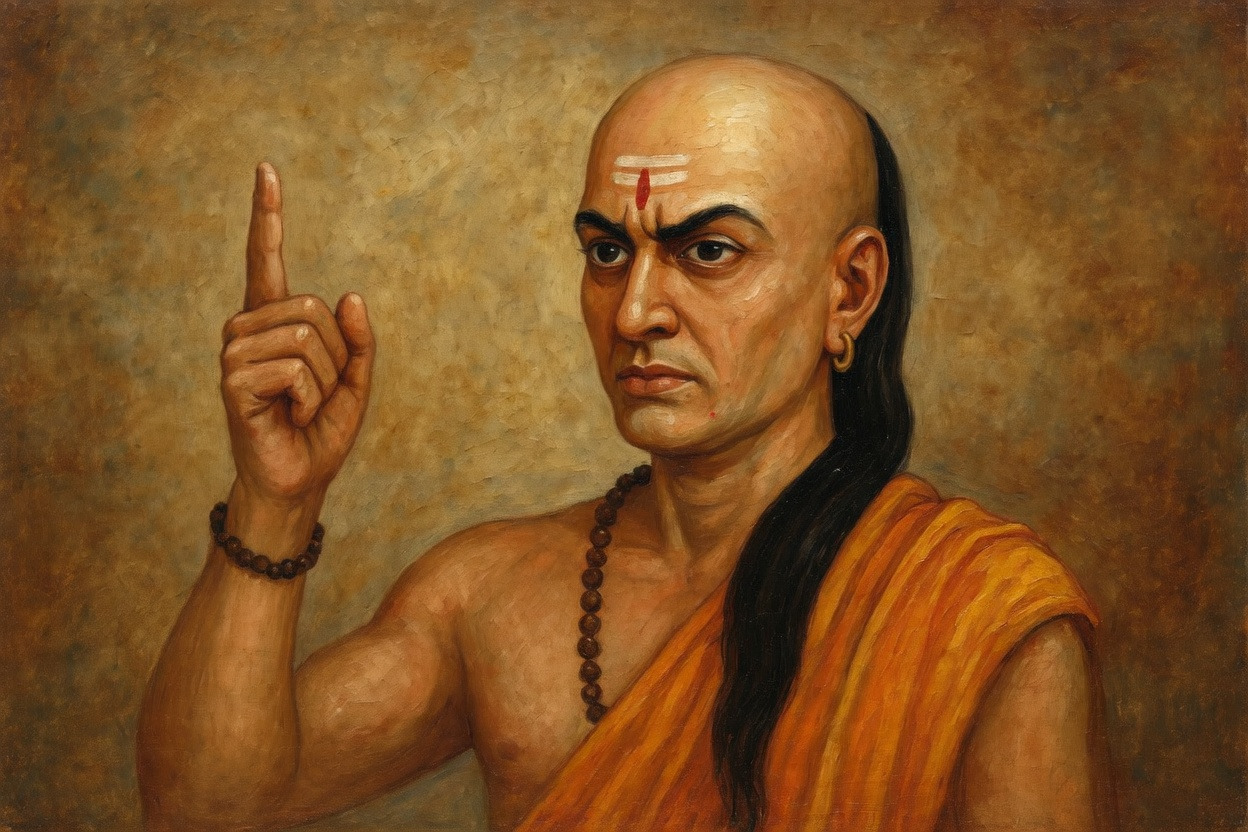
written by Ankita Banerjee
edited by Pranav md
On the ancient world's most systematic treatise on power and why the comparison historians reach for first is usually the wrong one.
Mention the Arthashastra to most readers and the response arrives before the text does: "Oh, the Indian Machiavelli." The label turns up in exam guides, television documentaries, foreign policy commentary, and casual conversation with equal confidence. It is not baseless Max Weber drew the comparison himself, and drew it sharply, calling Machiavelli's Prince "harmless" next to what Kautilya had written some eighteen centuries earlier. But the comparison has hardened into a substitute for reading the Arthashastra rather than an invitation to it. In the process, it has done the text a disservice twice over: first by treating a comprehensive, fifteen-book science of statecraft as though it were a footnote to a slim Florentine pamphlet, and second by obscuring how much modern scholarship has revised and complicated what we think we know about who actually wrote it, when, and why.
Amartya Sen put his finger on the deeper problem in The Idea of Justice. Introducing a fourth-century BCE Indian political analyst through the frame of a European writer born some eighteen hundred years later, he suggested, says less about Kautilya than about how narrow the reading list of modern political theory still is. That is the spirit in which this piece approaches the Arthashastra: not as India's answer to a Western original, but as an independent and still poorly understood work of political thought one whose real history involves a nearly lost manuscript, a scholarly identity crisis over its own authorship, and a popular legend that turns out to be almost entirely literary invention.
The Text Before the Man
For close to a thousand years, the Arthashastra existed only as a rumor. Later writers the poet Dandin, the playwright Vishakhadatta, various Buddhist and Jain chroniclers referred to Kautilya and his teachings, but the treatise itself had vanished, and by the time of British Indology it was widely treated as literary legend rather than a real, recoverable book. That changed in 1905, when R. Shamasastry, a Sanskrit scholar working as a librarian at the Oriental Research Institute in Mysore, came across a bundle of palmleaf manuscripts written in the Grantha script while cataloguing the institute's holdings. He recognized what he was looking at, transcribed and published the Sanskrit text in 1909, and issued a complete English translation in 1915 restoring, in a single stroke, a work that European Indologists had mostly filed away as folklore.
The rediscovery mattered for reasons beyond philology. It landed at a moment when colonial scholarship routinely doubted that premodern India had produced any systematic political thought at all, and Shamasastry's find became, and remains, one of the standard rebuttals to that assumption: a comprehensive, technically detailed manual of statecraft, taxation, and administration, older than most of what survives from the classical Mediterranean world.
The rediscovery also revived a legend that has since overtaken the text in the popular imagination. In the traditional story, Kautilya is a Brahmin scholar humiliated at the court of the Nanda king, who unties his topknot and swears not to retie it until the Nanda dynasty is destroyed, after which he engineers the rise of a young protégé named Chandragupta Maurya, founder of the Mauryan Empire. It is a vivid, cinematic story, retold in Sanskrit court drama, Buddhist chronicle, Jain hagiography, and more recently in several Indian television serials. It is also, on the evidence, almost entirely legend. The historian Thomas Trautmann traced the story to four independent literary traditions a Buddhist account preserved in the Pali chronicles of Sri Lanka, a Jain version composed more than a millennium after the supposed events, an eleventh-century Kashmiri collection of tales, and Vishakhadatta's play Mudrarakshasa and none of them are remotely contemporary with the fourth century BCE. The revenge motif appears in every version, which is itself telling: it reads as a narrative convention of court literature, not a detail preserved from living memory. Tellingly, the Arthashastra itself, whoever wrote it, shows no interest in telling this story at all. It is a famously impersonal document, dry and technical, almost entirely uninterested in the biography of its own author.
One Author, or a Tradition Wearing One Name?
The identity of that author is where the scholarship gets genuinely interesting, and where the popular "Chanakya equals Kautilya equals Machiavelli" shorthand starts to break down. The text names its author as Kautilya, with a single closing verse instead using the name Vishnugupta; the longstanding view holds that Kautilya was a clan name (gotra) and Vishnugupta a personal one, and that both refer to the semilegendary Chanakya, chief minister to Chandragupta Maurya around 300 BCE. R.P. Kangle, whose three-volume translation and study in the 1960s remains a landmark of Arthashastra scholarship, accepted this traditional identification and dated the text accordingly to the Mauryan period.
That view has not survived unchallenged. Early twentieth-century philologists, including Moriz Winternitz and Arthur Berriedale Keith noted an odd silence: Megasthenes, the Greek ambassador who left a detailed account of Chandragupta's court, never mentions Kautilya, and neither does the grammarian Patanjali in his own references to the Mauryas. The state the Arthashastra describes is also smaller and less centralized than the empire Chandragupta actually built, with no mention of the imperial capital Pataliputra; the text's vocabulary includes Greek loanwords and references to the Huna peoples, both pointing to a considerably later period. Thomas Trautmann's landmark 1971 statistical study of the text's prose style found that the Arthashastra carries the fingerprints of more than one hand, and Patrick Olivelle's more recent scholarship, building on Trautmann and on Mark McClish's textual history of the work, argues that the treatise took shape in at least two major stages: an earlier core, expanded and reorganized by a redactor working somewhere in the first two centuries of the Common Era, with the text reaching something close to its present form only by the third century CE.
None of this makes "Kautilya" a fiction. It means Kautilya functions less like the signature of a single Renaissance-style author, which is precisely the model the Machiavelli comparison quietly imports, and more like the name of a scholarly tradition, argued over and refined across generations before settling into the text we now read. That is a genuinely different kind of authorship than Machiavelli's, who composed The Prince alone, in a matter of months, during internal exile from Florentine politics. Treating the two as parallel acts of individual genius mismeasures both.
A State With Seven Limbs
Whoever assembled it, the Arthashastra offers one of the earliest attempts anywhere in the world to define the state analytically rather than personally, as a structure rather than merely a ruler. In its sixth book, "The Source of Sovereign States," the text sets out what later commentators call the saptanga, or seven-limbed theory of the state: the svamin (the sovereign), amatya (ministers and officials), janapada (territory and population), durga (fortifications), kosha (the treasury), danda (the army and coercive power), and mitra (allies). The text's own metaphor is mechanical rather than monarchical: the state resembles a chariot built from seven fitted parts, each capable of failure on its own, none of them sufficient alone.
This is worth pausing on, because it is easy to read past. More than two thousand years before political science settled on defining a state by population, territory, government, and sovereignty, an Indian text had already proposed a structurally similar model, and had gone further by treating the treasury and the army as categories distinct from the ruler who commands them, rather than collapsing "the state" into "the king's person" the way a great deal of medieval European political thought would. It is a strikingly unsentimental piece of institutional analysis for its age, whatever that age turns out to be.
The Geometry of Enemies
The seven-limbed state exists, in Kautilya's world, inside a crowded neighborhood of other states, and the treatise's most famous, and most frequently misunderstood, contribution is its attempt to map that neighborhood systematically. The rajamandala, or "circle of kings," sorts neighboring states into functional categories relative to a central, expansionist ruler, the vijigishu: the immediately bordering state is by default a likely rival, the ari; the state beyond that, sharing a border with the rival, is a natural ally, the mitra; further out sits a stronger, uncommitted middle power, the madhyama; and beyond even that, a distant power with no stake in the immediate contest, the udasina. Each of these has allies of its own, generating a nested structure that Book Six extends to twelve kingdoms and, by one common count, seventy-two distinct elements of interstate calculation.
This is not the crude "enemy of my enemy" aphorism it is sometimes reduced to. It is a working model for assessing relative power across an entire regional system, paired with a six-part repertoire of policy responses, the shadgunya, that a ruler selects from depending on his position within that geometry: sandhi, making peace, typically from weakness; vigraha, open hostility; asana, calculated neutrality; yana, mobilizing for war; samsraya, seeking shelter under a stronger power; and dvaidhibhava, playing a double game, peace with one neighbor while preparing for war against another. Underneath all six sits a simpler four-part toolkit, the upayas, meant to be tried more or less in sequence: sama, conciliation and negotiation; dana, material inducement; bheda, sowing division within a rival camp; and only then danda, coercive force, held back explicitly as a last resort rather than a first instinct. Read in order, the upayas describe an escalation ladder that would be entirely legible to a modern deterrence theorist, which is presumably why contemporary strategic writers keep returning to the Arthashastra when thinking through India's own position among stronger and weaker neighbors.
The Eyes and Ears of the King
If the mandala theory is the Arthashastra's contribution to what would now be called international relations, its treatment of intelligence is its contribution to statecraft's least discussed dimension: information. Kautilya devotes extraordinary attention to the architecture of espionage, describing two broad categories of agent: settled spies, embedded permanently in fixed roles, and itinerant spies, who carried intelligence between regional stations and the capital. Among the settled agents the text lists disguises ranging from a fraudulent wandering student to a householder, a merchant, an ascetic, and, notably for the period, women agents, whom Kautilya considered particularly effective operatives precisely because their movements attracted less suspicion. A further category of covert operative, including assassins and poisoners, existed for tasks well beyond ordinary surveillance; the text states plainly that a single, well placed agent, working with a blade, fire, or poison, could accomplish more than an entire army mobilized for open war.
None of this is treated as morally exceptional within the text, which is precisely why it has drawn the attention of later Indian strategic writers looking for precedent. Several defense analysts have compared Kautilya's intelligence doctrine to the functioning of India's own external intelligence service during the 1971 war with Pakistan, on the reasoning that both rest on the same underlying logic: sustained information gathering, cultivation of assets across enemy territory, and covert action in support of a broader political objective, rather than intelligence as an occasional adjunct to open war.
The Comparison That Would Not Die
Which brings the argument back to Machiavelli, and to why a genuinely illuminating comparison collapses under closer scrutiny. The similarities are real enough to explain why Weber reached for the parallel: both writers treat the survival of the state as a value capable of overriding conventional morality; both discuss deception, coercion, and force in unsentimental, technical language rather than through euphemism; both wrote as insiders rather than armchair theorists, Kautilya reputedly as minister to an emperor, Machiavelli as a Florentine diplomat and civil servant recently expelled from office.
The differences, though, are where the real argument lives. Scholars who have gone back to both texts closely, among them the political theorist Stuart Gray, writing in the journal Political Theory, and Roger Boesche before him, who has argued that Kautilya rather than Machiavelli deserves the title of history's first great political realist, draw out at least three. First, scope: Machiavelli's Prince is a slim, occasional text focused almost entirely on how a ruler acquires and retains personal power. The Arthashastra, spanning roughly six thousand aphorisms across fifteen books, addresses taxation policy, mining and metallurgy, contract law, weights and measures, urban planning, agricultural policy, and the regulation of merchant guilds, alongside war and diplomacy: a difference of genre as much as of depth, closer to a fusion of Aristotle's Politics with a treasury department's operating manual than to anything in Machiavelli.
Second, the constraint on the ruler differs in kind, not merely degree. Machiavelli's prince answers, in the end, only to his own survival and reputation; virtù is a personal quality serving a personal end, and where conventional morality gets in the way, Machiavelli is candid that it should yield. Kautilya's king is bound by dharma, the wider moral and cosmic order, and, more concretely, by an explicit doctrine tying his own legitimacy to the material welfare of his subjects, a doctrine that recurs throughout the text as a working standard against which royal conduct is measured.
Third, and this generalizes Sen's real complaint, the comparison itself imports a category error. Machiavelli was one man writing one short book under specific and well-documented political pressures. Kautilya, as the previous section argued, more plausibly names a scholarly tradition refined over centuries. Measuring a single Renaissance pamphlet against a multigenerational Sanskrit school of statecraft, and then registering surprise that the latter is more comprehensive, is not really a comparison of equivalent things. It is closer to comparing a memoir with an encyclopedia and remarking that the encyclopedia covers more ground.
The Welfare Clause
The single feature of the Arthashastra that the "Indian Machiavelli" label obscures most completely is its theory of welfare. Yogakshema, a compound meaning roughly acquisition and preservation, or more loosely security and wellbeing, recurs throughout the text as the stated purpose of the entire apparatus of statecraft that Kautilya otherwise describes in such unsentimental detail. The formulation later commentators return to again and again holds, in essence, that the king's own flourishing is not a private matter distinct from his subjects': his benefit lies in theirs, and what genuinely serves the people is what he is obliged to treat as good, not merely what pleases him personally. The term has not stayed confined to antiquity. Finance Minister Nirmala Sitharaman invoked yogakshema explicitly while framing the 2022 Union Budget's approach to welfare spending, treating a two thousand year old concept as a live reference point rather than an antiquarian curiosity.
The paradox is worth sitting with rather than resolving too quickly. A text that catalogs assassination methods, disguised espionage, and the deliberate sowing of dissension among rivals with total equanimity is, in the same breath, one of the earliest systematic arguments anywhere that a state's legitimacy rests on its active provision of welfare to the people it governs: not merely order, not merely defense, but yogakshema in the fuller sense of enabling people to acquire and keep what sustains them. That combination, hard edged instrumental realism yoked to an explicit welfare obligation, has no real equivalent in Machiavelli, whose Prince has remarkably little to say about what a ruler owes the ruled beyond avoiding their hatred. It is arguably the more original feature of the two texts, and the one the "Indian Machiavelli" label leaves almost entirely out of frame.
Reading Kautilya on His Own Terms
None of this is an argument that Kautilya and Machiavelli are unrelated, or that the comparison should never be drawn. It is an argument that the comparison, used as a substitute for engagement rather than an opening to it, has cost the Arthashastra three things at once: an accurate account of its own strange textual history, in which a supposedly lost work was rediscovered on a Mysore library shelf and turned out to be the product of a tradition rather than a single sitting; an honest reckoning with how much of the popular Chanakya story is later literary embroidery rather than attested history; and a fair hearing for what the text actually argues, which is considerably stranger, broader, and more morally complicated than "India's version of a familiar European book."
Sen's complaint, generalized beyond this one case, was that global political theory still organizes itself around a canon in which non-Western texts become legible only once translated into a Western reference point. The Arthashastra survived a millennium of near total loss, a Mysore library shelf, a redating controversy that is still not fully settled, and now a popular label that flattens it into someone else's footnote. At minimum, it has earned the right to be read on its own terms before it is read as anyone's answer to anyone else.
References and Further Reading
Boesche, Roger. The First Great Political Realist: Kautilya and His Arthashastra. Lanham, MD: Lexington Books, 2002.
Gray, Stuart. "Reexamining Kautilya and Machiavelli: Flexibility and the Problem of Legitimacy in Brahmanical and Secular Realism." Political Theory 42, no. 6 (2014).
Kangle, R.P. The Kautilya Arthasastra, Parts I–III. Delhi: Motilal Banarsidass, 2nd ed., reprint 2010.
McClish, Mark. The History of the Arthaśāstra: Sovereignty and Sacred Law in Ancient India. Cambridge: Cambridge University Press, 2019.
Olivelle, Patrick, trans. King, Governance, and Law in Ancient India: Kautilya's Arthaśāstra. New York: Oxford University Press, 2013.
Sen, Amartya. The Idea of Justice. Cambridge, MA: The Belknap Press of Harvard University Press, 2009.
Trautmann, Thomas R. Kautilya and the Arthashastra: A Statistical Investigation of the Authorship and Evolution of the Text. Leiden: E.J. Brill, 1971.
"Social, Political & Economic Landscapes in Kautilya's Arthashastra." World History Encyclopedia, 2020. worldhistory.org/article/1561/
"R. Shamasastry." Wikipedia. en.wikipedia.org/wiki/R._Shamasastry
"Chanakya." Wikipedia. en.wikipedia.org/wiki/Chanakya
"Yoga Kshema: Its Roots and Relevance in the Contemporary Strategic Landscape." Manohar Parrikar Institute for Defence Studies and Analyses (MPIDSA), 2025. idsa.in/publisher/issuebrief/
"Espionage in Kautilya's Arthashastra: A Case Study of the 1971 India-Pakistan War and Intelligence." Centre for Land Warfare Studies (CLAWS). claws.in/
About the Author
Ankita Banerjee is a B.S.–M.S. student in Computer Science and Data Analytics at the Indian Institute of Technology (IIT) Patna. Her technical research spans drone guidance systems, artificial intelligence, and digital infrastructure, while her academic interests extend to the study of ancient Indian knowledge systems and their relevance to contemporary political thought and statecraft.
She has presented research at institutions including the Indian Statistical Institute, Central Sanskrit University (Jaipur), and the Central University of Gujarat. She also holds an IKS Educator Certificate from Madras Sanskrit College.
Through her writing, Ankita critically examines the assumptions of Western-centric political theory and seeks to reinterpret classical Indian texts within their own intellectual and civilizational context, highlighting their continuing relevance for modern debates on governance, ethics, and statecraft.