
The Architect of Colonial Contempt: James Mill.
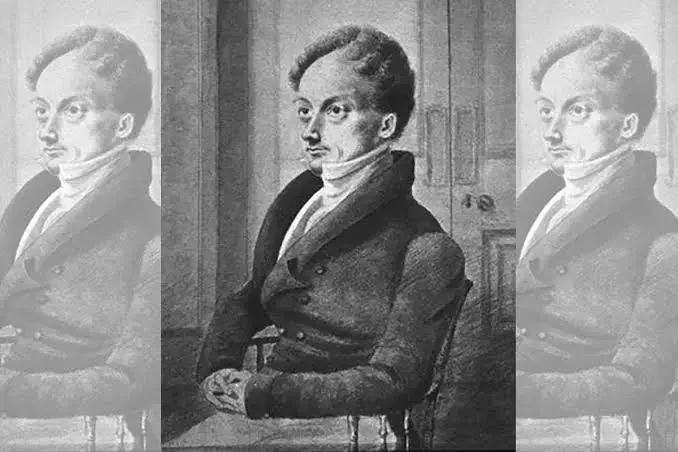
Based on the book Colonial Discourse and the Suffering of Indian American Children by Kundan Singh and Krishna Maheshwari
James Mill’s three-volume work, The History of British India (1817), is widely regarded as one of the most influential texts in the history of British imperialism. Backed by the massive imperial power of the East India Company, this work fundamentally altered the global representation of India and Hinduism.[1] However, modern postcolonial analysis reveals that Mill’s work was less a factual historical account and more a piece of colonial-racist discourse. His writings systematically portrayed the Hindu people as savage, primitive, and uncivilized to justify British colonial rule.[2]
This article examines James Mill’s life, his justifications for his methodology, his views on race and civilization, and the vast discrepancies between his claims and established historical evidence.[3]
James Mill’s Early Life and Career
To understand Mill’s writings on India, one must first understand his background and the social resentments that shaped his worldview. James Mill was born on April 6, 1773, in Scotland. His father, James Milne, was a humble shoemaker. His mother, Isabel Fenton, who had aristocratic ancestry, changed the family name to "Mill" and was determined to raise her son as a gentleman, keeping him entirely away from the family's shoemaking business.[4]
Mill received a strong education, eventually enrolling in Divinity studies at the University of Edinburgh, which he finished in 1797. Unable to find a permanent job as a preacher, he supported himself by tutoring the children of local aristocrats, including the Stuart family. During this time, a romance blossomed between Mill and Wilhelmina Stuart. However, due to his humble background, Mill was strictly forbidden from marrying her. This personal rejection, combined with other insults he suffered while serving the upper classes, fueled a lifelong hatred for the aristocracy.[5]
In 1802, Mill moved to London to make a living as a writer. He worked as an editor and contributor for various journals, writing extensively on British social and political conditions. In 1806, he began writing The History of British India, a massive undertaking that took him twelve years to complete.[6]
The publication of the History in 1817 was a resounding success. It deeply impressed the East India Company, which hired him in 1819. Mill rose quickly through the ranks, and by 1830, he was the Examiner of India Correspondence. He functioned essentially as a virtual Under Secretary of State for India, wielding immense administrative power over a massive empire.[7]
Crucially, Mill’s career as a reformer in Britain directly shaped his views on India. Working alongside Jeremy Bentham as a champion of Utilitarianism, Mill deeply desired to dismantle the power of the British monarchy, the aristocracy, and the Church of England. Scholars note that Mill projected the precise conditions he wanted to suppress in Britain onto the Hindu society. When Mill attacked the Hindu Brahmins, he was effectively criticizing the English clergy; when he condemned the Kshatriyas (the warrior class), he was targeting the British aristocracy.[8]
The Justification for Never Visiting India
One of the most striking facts about James Mill’s definitive history of India is that he never visited the country, nor did he learn any of its native languages.[9]
Rather than viewing this as a limitation, Mill boldly argued that his physical distance was actually an intellectual advantage. In the preface of his work, he claimed that observing India directly through one's "eyes and ears" would only result in "partial impressions" that could distort a scholar's judgment. He asserted that a duly qualified man may attain more knowledge of India in one year in his closet in England than he could obtain during the course of the longest life, by the use of his eyes and ears in India.[10]
Mill believed that a European scholar sitting in London was uniquely positioned to objectively synthesize translations, travelogues, and government reports. From a postcolonial perspective, this approach is a prime example of "epistemological violence", where the colonizer assumes total authority to define the colonized without granting them a voice or acknowledging their lived reality.[11]
Views on Indians and Race
Mill’s vocabulary regarding the Hindu people was universally degrading. Throughout his chapters, he deployed the language of racial superiority, repeatedly labeling Hindus as savage, primitive, uncivilized, brute, rude, and coarse.[12]
He characterized the Hindu population as inhuman, villainous, timid, weak, cowardly, lazy, pernicious, greedy, filthy, superstitious, and fatalistic. Mill argued that the physical temperament of the Hindus was inherently weak and slender, which he equated with "effeminacy" and a "feminine spirit." He claimed that they possessed a "phlegmatic indolence" and a "love of repose," utilizing the common colonial stereotype of the lazy native who requires European discipline.[13]
According to postcolonial thinkers like Memmi and Fanon, this intense racialization is a standard mechanism of colonialism. The colonizer must construct an image of the colonized as completely devoid of values, logic, and civilization to justify their own presence and privileges. By driving the Hindu "below the ground," Mill intellectually elevated the British to the absolute pinnacle of civilization.[14]
Defense of British Colonial Rule
Mill’s historical framework was explicitly designed to legitimize British governance in India. He argued that the British public's knowledge of India was "singularly defective" and sought to correct it by providing a manual for administrators. The History was soon made required reading for East India Company civil servants training at Haileybury College.[15]
Mill built a case that the Hindu population had never experienced anything other than severe despotism and misery. He contended that it would not admit of any long dispute that "human nature in India gained, and gained very considerably, by passing from a Hindu to a Mahomedan government." Because Mill defined the natives as essentially childlike and primitive, he provided the intellectual foundation for the paternalistic, authoritarian rule that characterized the British Raj.[16]
The Portrayal of Hindu Civilization
Mill dedicated seven chapters to breaking down every aspect of Hindu civilization, ensuring no element was left with any semblance of dignity or advancement.[17]
Society and the Caste System: Mill made hierarchy and oppression the defining characteristics of Hindu society. He argued that the Brahmins held uncontrollable, dictatorial power over the masses by utilizing the terrors of religion and superstition. He described the Kshatriyas as objects of unbounded, fearful respect. At the bottom, he placed the Shudras, claiming their condition was one of "abject and grovelling submission," and that they were driven out from all advantages of society.[18]
Governance and Taxation: According to Mill, Hindu governance was a crude, absolutist despotism. He claimed that the Hindu king possessed all legislative, executive, and judicial powers, deciding the fate of his subjects purely on arbitrary whims. Mill also described the Hindu taxation system as erratic and oppressive, functioning primarily through extortion, chicanery, and fraud.[19]
Laws and Jurisprudence: Mill ridiculed Hindu laws, claiming they were the product of a "rude mind" incapable of logical arrangement. He asserted that the Hindus failed to make the basic distinction between civil and penal law. He described their jurisprudence as filled with "vagueness and ambiguity," leading to endless contradictions and a system where judicial decisions were nothing more than the momentary will of a corrupt judge.[20]
Religion: Mill displayed immense hostility toward Hinduism, calling it an "irrational, incoherent, immoral, childlike, and pagan" religion. He described it as the "offspring of a wild and ungoverned imagination" and the "most extravagant of all specimens of discourse without ideas." Mill dismissed the Hindu concept of a single, unifying divine principle (Brahman), arguing instead that it was merely a primitive worship of the sun and the elements. He also condemned the religion for valuing useless ceremonies and penance over actual moral conduct.[21]
The Status of Women: Mill used the treatment of women as a primary metric for civilization, claiming that among rude people, women are degraded. He asserted that Hindu women were treated with habitual contempt and lived in a state of subjugation and abject slavery.[22]
Controversial Statements and Established Historical Evidence
James Mill’s claims were highly provocative, but they were not left unchallenged by those who actually possessed direct knowledge of India. Horace Hayman Wilson, a leading Sanskrit scholar who lived in India for decades, edited Mill’s History in 1840. Wilson added extensive footnotes to the text, systematically dismantling almost all of Mill’s core arguments.[23]
Some of Mill's most controversial claims, contrasted with historical evidence highlighted by Wilson, include:
Claim: Hindu kings possessed unchecked, despotic power over all laws.
Evidence: Wilson countered that "the Raja was not above the law." He pointed out that Hindu kings were not the sole lawmakers and were legally required to consult with advisors and judicial authorities. The system actively separated military from civil authority.[24]Claim: The Shudras lived in "inhuman" degradation, worse than slaves.
Evidence: Wilson noted that Mill deliberately collected extreme texts while omitting favorable ones. The condition of the Shudra, Wilson explained, "was infinitely preferable to that of the helot, the slave, or the serf of the Greek, the Roman, and the feudal systems." They had personal liberty, could accumulate wealth, and their services were compensated.[25]Claim: Hindu courts were completely arbitrary and lacked legal definitions or procedures.
Evidence: Contemporary authorities cited by Wilson proved that Hindu governments utilized a highly structured system with "fifteen sorts of inferior courts, all having their several jurisdictions well defined," functioning similarly to English common law courts.[26]
Conclusion
James Mill’s The History of British India was a monumental exercise in the fabrication of a colonized people. Driven by his own class resentments in Britain and his unwavering belief in European superiority, Mill manufactured an image of the Hindu as a primitive, effeminate, and oppressive savage.[27]
Although highly qualified scholars like Horace Hayman Wilson explicitly proved that Mill's facts were severely defective, highly prejudiced, and structurally incorrect, the text remained the authoritative history of India for generations. Because it served the political needs of the East India Company, Mill's colonial-racist discourse was institutionalized, shaping British policy and cementing an intellectual legacy of racism that continues to cast a long shadow today.[28]
Footnotes
[1]: Kundan Singh and Krishna Maheshwari, Colonial Discourse and the Suffering of Indian American Children: A Francophone Postcolonial Analysis (Palgrave Macmillan, 2024), vii-ix.
[2]: Ibid., vii-ix.
[3]: Ibid., 4-5.
[4]: Ibid., 7.
[5]: Ibid., 8.
[6]: Ibid., 8-9.
[7]: Ibid., 9-10.
[8]: Ibid., viii-ix.
[9]: Ibid., 11.
[10]: James Mill, The History of British India: Volume 1, ed. Hayman Horace Wilson (London: James Madden and Co., 1840), xxi–xxii.
[11]: Singh and Maheshwari, Colonial Discourse, 1-2.
[12]: Ibid., vii-ix.
[13]: James Mill, The History of British India: Volume 1, 477, 479–80.
[14]: Singh and Maheshwari, Colonial Discourse, 23-24.
[15]: James Mill, The History of British India: Volume 1, xvii.
[16]: Ibid.
[17]: Singh and Maheshwari, Colonial Discourse, vii.
[18]: James Mill, The History of British India: Volume 1, 194–95.
[19]: Singh and Maheshwari, Colonial Discourse, 54-55, 61-62.
[20]: James Mill, The History of British India: Volume 1, 245–46.
[21]: Ibid., 166–67, 334.
[22]: James Mill's Colonial India Critique (Source Document).
[23]: Singh and Maheshwari, Colonial Discourse, 44-46.
[24]: Horace Hayman Wilson, footnote in James Mill, The History of British India: Volume 1, 203–4.
[25]: Ibid., 194.
[26]: Ibid., 213.
[27]: Singh and Maheshwari, Colonial Discourse, viii-ix, 23.
[28]: Ibid., vii-ix, 44-45.
