
The Mughal Harem: Gilded Cage, Silent Empire
Before the Veil Fell: How Indian Women Lost Everything
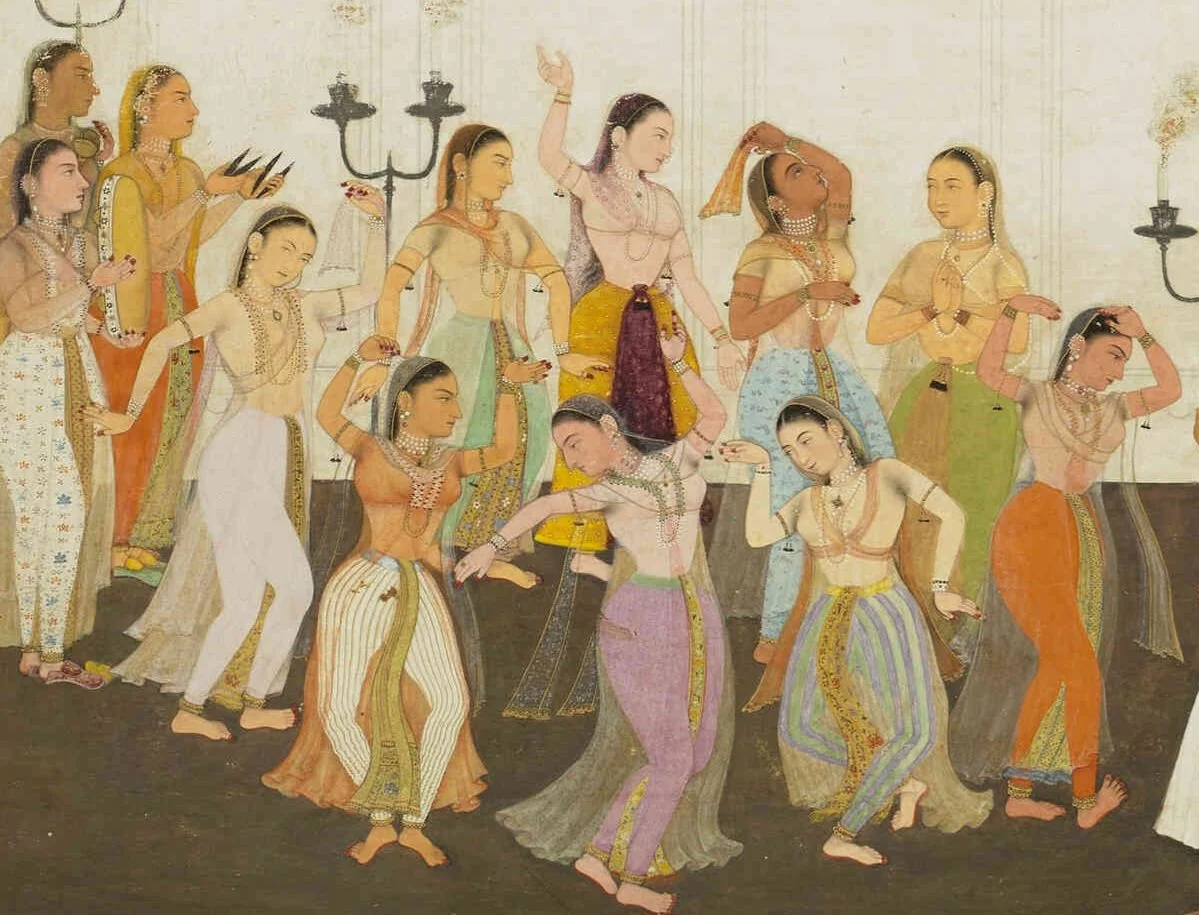
In ancient India, women were not second-class citizens. They were educated. They chose their own husbands in ceremonies called swayamvara. Female seers sat among scholars. A woman's learning was considered a mark of refinement, not a threat. By the standards of the ancient world, the position Indian women held in their own society was remarkably elevated. Then something changed. The transformation arrived in stages, but one shift in particular rearranged everything. With the arrival of Islam into the Indian subcontinent came a dramatically different vision of womanhood. Purdah, the strict veiling and sequestering of women, was enforced with new rigidity. Girls' education became socially irrelevant. The birth of a daughter, once a moment of joy, quietly became a moment of shame. Historian Soma Mukherjee documents this plainly: with the coming of Islam, Indian women "came to occupy an even lower status." The street, the marketplace, the seat of learning closed to them one by one.
But here is the question nobody fully answers.
Where did all those women go? What did they become inside the walls of the most powerful empire in the world? And what was really happening behind those walls that the official chronicles were too careful, or too afraid, to put into writing?
That is the story of the Mughal Harem.
A World Inside a World: Life in the Mughal Harem
The word harem comes from the Arabic haram, meaning forbidden, sacred, inviolable. The Mughal harem was all three at once: forbidden to outsiders, sacred in its rituals, and entirely invisible to the outside gaze.
To call it a private household is to catastrophically understate what it was. At its height, the harem of Emperor Akbar housed over five thousand women. Not just wives and concubines. There were mothers, daughters, aunts, servants, slave girls, dancing women, musicians, nurses, and attendants of every rank. An entire civilization, compressed behind a single set of guarded walls.
Life inside was governed by a rigid hierarchy. Not every woman was equal. A childless wife ranked above a slave girl but below a wife who had borne a son. The emperor's mother sat at the very summit, commanding deference even from senior queens. The higher your position, the more flowed to you: finer apartments, richer cloth, more attendants, and most crucially, closer access to the emperor himself.
The physical space was designed to enforce this order and to enforce secrecy above everything else. Rooms sometimes had no doors, or had doors fastened from the outside. Movement was monitored at every point. Communication with the outside world passed through layers of intermediaries. The French traveler François Bernier, who visited the court, described a women's quarter so sealed that even physicians summoned to treat sick women entered blindfolded, led by eunuchs with thick cloth covering their heads, permitted to see nothing of the space around them.
The demography of the harem was strikingly cosmopolitan. Women arrived from across the known world. Irani and Turani beauties were captured or gifted. Georgian women were prized for their complexions. Turkish women carried the bloodlines of Central Asian nobility. Rajput princesses came from the deserts of western India. Muslim noblewomen arrived from Delhi and Agra. Occasional European women drifted into the court's orbit through trade, diplomacy, or chance. In its strange way, the harem was one of the most diverse gatherings of women anywhere on earth. They brought their languages, their cuisines, their religions, and their music. A Persian ghazal might float past a Rajasthani folk song in the same corridor.
But beneath the cosmopolitan surface ran one single, unchanging purpose. These women existed to please the Sultan.
How the Harem Was Filled: War, Conquest, and Enslaved Women
A harem of five thousand women does not fill itself.
Every time a Mughal army swept through a Hindu kingdom, the battlefield was only part of the story. What came afterward, in the weeks and months following a conquest, was a systematic harvest. Women of the defeated nobility were claimed. Temples were raided. Villages were swept through. The most beautiful women, regardless of their station, were separated from their families and sent toward the imperial court.
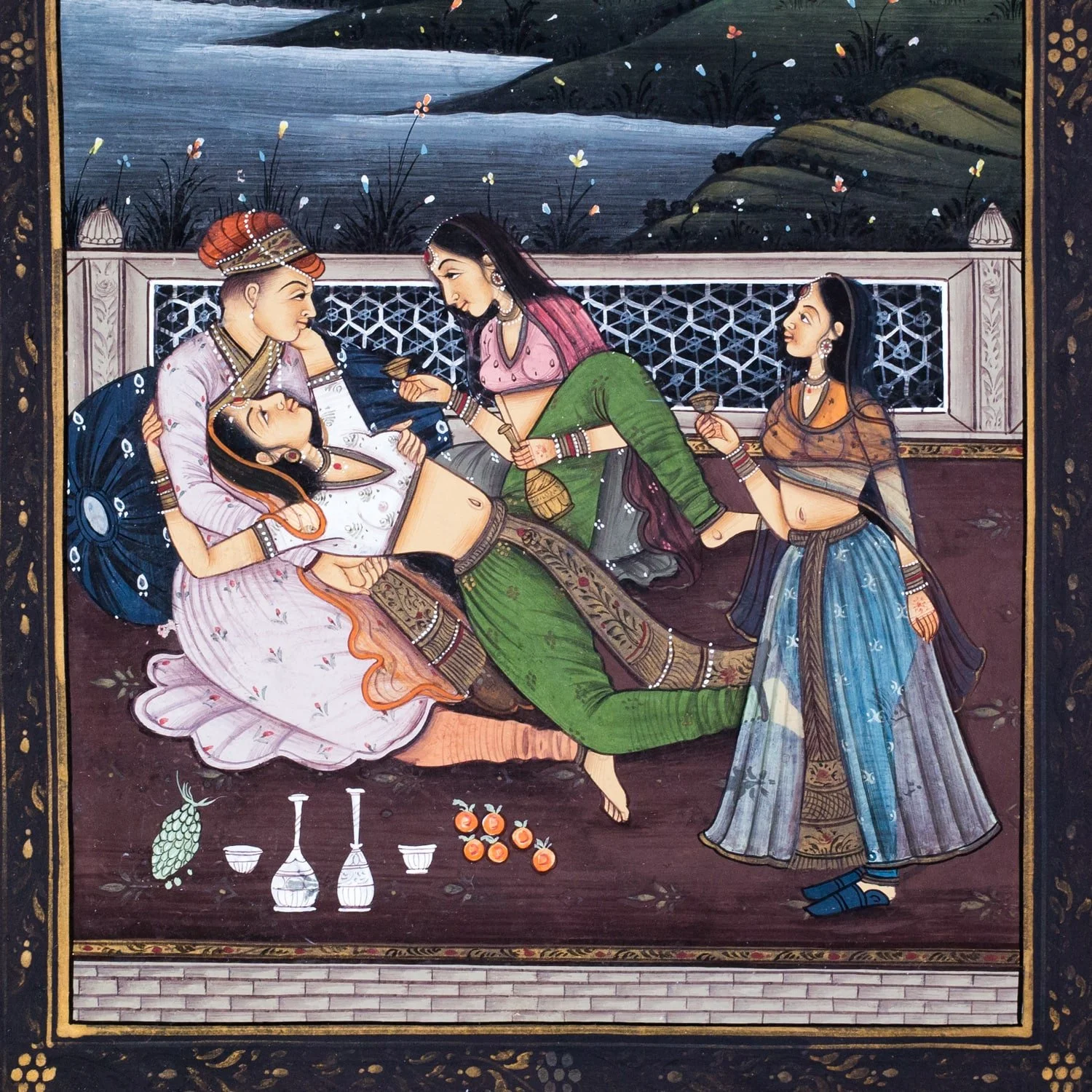
The slave markets of medieval Muslim India were busy, well-organized institutions. K.S. Lal documents that women were purchased openly from these markets across India and abroad. Ibn Battuta, who visited the court of Muhammad bin Tughlaq as a foreign dignitary, describes casually receiving female Hindu captives as gifts and distributing them among his companions as a matter of course. On the occasions of Muslim festivals like Eid, daughters of Hindu rajas captured during the preceding year would be brought forward, made to sing and dance before the assembled court, then formally distributed among nobles, amirs, and foreign dignitaries as rewards. The practice was regular, systematic, and recorded in the court's own chronicles without apology.
Once inside the harem, a woman's origins determined very little. Whether she had entered as a princess given in political marriage, as a war captive, or as a purchased slave girl, she occupied the same compound as every other woman. What separated them was the face they presented and the favor they could win. K.S. Lal writes that a slave girl's face determined her place in the harem and in the heart of the master. The more beautiful, the more musically talented, the more refined her speech, the higher she could climb. Some were taught to sing. Some learned to recite Persian poetry. Their masters gave them soft, fragrant names: Gulab (rose), Champa, Jasmine, Yasmin, Moti (pearl). Names that said everything about what these women were valued for.
Four Wives, Unlimited Concubines: The Legal Architecture of Desire
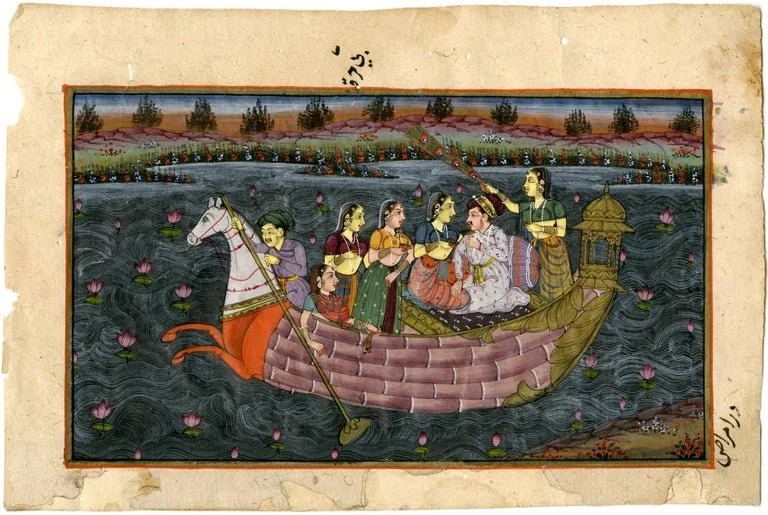
Islamic law, as practiced by the Mughal court, permitted a man to take four wives. These were official wives, each with legal protections, rights to maintenance, and children of recognized status. But the law also contained a second provision, far less commonly discussed. A man could keep an unlimited number of concubines and slave girls. The Quranic permission to cohabit with those whom "the right hand possesses" meant that a sultan of means faced no religious ceiling on the size of his harem whatsoever.
One crucial legal detail made this arrangement explosive in its consequences: a child born to a slave concubine held the exact same legal status as a child born to a free wife. Sons of slave girls could, and did, become princes. This meant every woman in the harem, regardless of how she had arrived or what she had been before, harbored the same ultimate ambition. To bear the emperor a son.
The consequences inside the harem were ferocious.
Queens and concubines occupied the same compound, breathed the same air, and competed for the same singular prize. Friendships formed, and the sources speak of genuine warmth among many women, but underneath ran a current of jealousy fierce enough to shape the politics of succession. Mukherjee writes that jealousies were prevalent though never shown directly. Every woman performed pleasantness for those watching. Every woman watched the others.
The competition expressed itself across a wide spectrum, from petty scheming to outright murder. Scandals were manufactured about rivals. Women who became pregnant were targeted. Babur's devoted Afghan wife Bibi Mubarika was secretly administered drugs through harem intrigues that permanently deprived her of motherhood. She died childless. One woman named Mewajan so desperately wanted to announce a pregnancy before her rival that she fabricated one entirely, claiming her aunt had once delivered a child in the twelfth month when ten months, then eleven, passed with nothing to show for it. The deception collapsed in full view of the court.
But it went considerably further than fabrication. Abortions were induced by force and by deliberate design. Jean Baptiste Tavernier wrote that the moment a harem learned one of its women was with child, the others used every conceivable method to cause her to miscarry. A Portuguese surgeon attached to the household of Shaista Khan admitted that the governor's chief wife had forced miscarriages on eight other harem women in a single month, refusing to allow any children except her own to survive. When Shah Alam's wife conceived a sixth child against Aurangzeb's wishes, the infant survived birth but was quietly poisoned. European physicians were occasionally summoned to perform these terminations, and when they refused, other means were found.
Sons were currency. Daughters were a liability. One nobleman threatened to divorce his wife if she produced another girl. Another, Daud Khan, killed his female children without compunction. In this world, being born female was the first of many misfortunes a woman would face.
The Men Who Were Made into Guards: Eunuchs and the Price of the Harem
No figure in Mughal history is more disturbing, or more consistently misunderstood, than the eunuch.
They were everywhere inside the palace complex. At the gates, in the corridors, accompanying women in curtained palanquins, leading blindfolded physicians through darkened passageways. Their loyalty was considered absolute, because their interests were understood to be entirely bound to their masters. They could have no wives, no children, no heirs. Their accumulated wealth reverted to the emperor upon their death. In the cold logic of the court, they had nowhere else to belong and therefore no reason to betray.
But where did they come from? This is the part that rarely makes it into the grand narratives of Mughal splendor.
Many were boys. Peasant boys, from poor families in Bengal and particularly from Sylhet, where Mughal taxation pressed down with crushing, unrelenting weight. Families who could not pay the revenue demanded by the empire faced an impossible arithmetic. What could they offer? What they had was sons. K.S. Lal documents that in Sylhet it had become customary for families to castrate a few of their sons and deliver them to the governor in lieu of revenue payment. The boys were mutilated, sold upward through the administrative chain, and eventually arrived as guards in the palaces of the very men whose tax demands had created this misery in the first place.
The practice spread so widely that Jahangir issued repeated imperial orders for its suppression. Aurangzeb formally banned the castration of young children empire-wide in 1668. Both emperors, however, continued accepting eunuchs as gifts throughout their reigns. Their outrage had firm limits.
The psychological damage was deep and lasting. Aitbar Khan, trusted so completely by Aurangzeb that he was placed in personal charge of the imprisoned Shah Jahan, never forgave his parents for what had been done to him. When they traveled all the way from Bengal to see their son, he refused to meet them. He said he had been deprived of the great pleasures attainable in this world. He took this bitterness out on his prisoner, treating Shah Jahan in captivity with cruelty and contempt that far exceeded any instruction he had been given.
The eunuchs saw everything and knew everything. And occasionally they decided that their master's instructions were merely suggestions. When two men were smuggled into Roshanara Begum's apartments and Aurangzeb ordered them quietly returned the same way they had entered, the eunuchs threw them from the tops of the palace walls instead. The emperor was furious. But the eunuchs remained in their posts, because they were too essential to the machine to be properly punished.
Princesses Who Could Never Marry: The Scandal Beneath the Silence
By the reign of Shah Jahan, something quietly devastating had taken hold among the royal princesses of the Mughal house. They could not marry. Not officially. Not in practice. The unwritten prohibition hardened across generations and condemned women of extraordinary intelligence and capability to permanent, involuntary celibacy.
Jahanara, Roshanara, Zaib-un-nisa. Brilliant women. Wealthy women. Women who wrote poetry that scholars still study, who managed vast estates, who corresponded with philosophers and held religious authority in their own right. None of them were permitted to have a husband.
The reason was dynastic paranoia of the most calculated kind. To give a princess in marriage was to give her husband a platform adjacent to the throne. The Mughal succession had always been decided by blood and battle, and no emperor wanted to manufacture a well-resourced, imperially connected rival through his own daughter. The cultural logic compounded this: a bride's family was traditionally considered subordinate to the groom's, and no Mughal emperor would place himself in a position of social inferiority to any man alive. Even willing noblemen were scarce, because they feared a royal wife would simply rule them, and a single complaint from a princess to her imperial father could finish a career overnight.
What happened to the desires of women imprisoned by this prohibition is recorded in the sources with a mixture of horror and barely concealed fascination.
Roshanara Begum, Shah Jahan's younger daughter, was said to have admitted two men into her apartments where they remained for several days. When one was eventually found wandering the palace gardens, abandoned by the attendants meant to smuggle him out under cover of night, he was brought before Aurangzeb. The emperor, shrewd and conscious of appearances, ordered the man quietly returned over the wall the same way he had come. The eunuchs threw him from the top instead. Roshanara never fully recovered her brother's regard.
The Italian physician Niccolao Manucci, who had extensive access to court gossip through Portuguese connections, reported something even more extraordinary. He claimed Roshanara secretly kept nine young men in her apartments at the same time. When Aurangzeb's own daughter discovered the arrangement and asked Roshanara to share one of them, Roshanara refused. The daughter went directly to her father. All nine men were caught, publicly announced as common thieves, and destroyed within a month by secret tortures. Aurangzeb, already furious at the disgrace, reportedly shortened his sister's life with poison.
Jahanara, Shah Jahan's eldest and most celebrated daughter, was not spared either. Bernier wrote of her receiving secret visits from a young man of modest rank. When Shah Jahan arrived unexpectedly at her apartments, the young man concealed himself inside the large cauldron used for bathing. The emperor spoke to his daughter on ordinary topics, betraying nothing. Then, as he rose to leave, he calmly ordered the eunuchs to light a fire beneath the cauldron. He did not depart until they confirmed the man was dead.
These women were trapped in an institution that denied them the most basic human freedoms. What the court called scandal was, in truth, the inevitable consequence of denying human beings their humanity in the service of imperial appearances.
How Emperors Were Made: The Prince in the Gilded Cage
Every Mughal emperor was first a boy inside a harem.
Formal education typically began around age five with the appointment of prestigious tutors. Under Akbar, the curriculum was notably broad. Princes were taught Arabic, Persian, Hindi, and Portuguese. Jesuit priests from Goa taught alongside Brahmin scholars. Prince Khusrau studied Indian philosophy under a celebrated pandit named Shiv Dutt. The intention was to produce rulers fluent in every part of their empire, who understood its many peoples on their own terms.
Beyond their academic tutors, princes were educated by senior eunuchs and court matrons in what amounted to a full school of statecraft and emotional control. Mock courts were held regularly. The boys learned to deliver judgments, project authority, and manage men, all before they had any real power to exercise. The single most important lesson, drilled in from the earliest years, was this: a prince does not show pain. Nurses taught that weeping was the ultimate shame for royalty. When Jahangir beat young Prince Shahryar until the boy bled, Shahryar refused to shed a single tear. The training had worked precisely as intended.
Jahangir instructed his sons to speak little, eat little, and sleep little. Aurangzeb drafted a rigid daily schedule for his fifteen-year-old son Muazzam: rise seventy-two minutes before sunrise, pray, read the Quran, hold audiences, practice handwriting, and never speak one word more than was absolutely necessary.
But the harem also did something to these boys that no emperor had intended. Surrounded from birth by servile attendants, isolated from the rougher lessons of the outside world, and steeped in the luxury and intrigue of the zenana, the princes absorbed the vices of court life as readily as its virtues. European observers like Bernier and Manucci recorded that behind the facade of immense gravity these boys maintained in public, they learned in private to drink secretly, take drugs, and pursue pleasures that court formality concealed. They became extraordinarily skilled at performing virtue for their fathers while living an entirely different curriculum in the spaces nobody watched. The institution that was meant to forge emperors also, with remarkable reliability, introduced them to every weakness that would eventually undo them.
Around the age of sixteen, a prince was formally married and given his own household within the palace complex. But the education the harem had given him traveled with him to the throne and beyond. Its discipline and its decadence, its capacity for power and its capacity for ruin, were already woven into who he had become.

Empress Nur Jahan, Padshah Begum.
The Wall That History Built
The Mughal harem was a mirror held up to an entire civilization, and what it reflected was not simple.
There was genuine power inside it. Nur Jahan, who commanded armies, struck coins in her own name, sat in the royal balcony to receive the salutations meant for emperors, and ran an empire while her husband faded, is proof enough. There was genuine culture inside it. Half of what we celebrate about Mughal art, architecture, and cuisine was born from the women who lived there. There was genuine warmth inside it. Women who raised other women's children with ferocious love, who formed bonds that lasted decades and quietly shaped dynasties.
But there was also systematic cruelty on a vast scale, organized subjugation, and the erasure of individual women's lives and desires as a matter of ordinary imperial administration. There were boys castrated by desperate fathers who could find no other way to pay their taxes. There were Hindu women separated from their families after military defeat, renamed, and handed to men who thought of them as ornaments. There were forced abortions and poisoned infants and princesses driven by loneliness into scandals that cost them their lives.
The wall of the harem not only keeps women in. It kept the truth out.
We are still, slowly, working to bring it back.
Sources:
Royal Mughal Ladies and Their Contributions by Soma Mukherjee.
The Mughal Harem by K.S. Lal.
Islamic Slavery in Medieval India: Theory and Practice by K.S. Lal.
