
The Last Pagan Emperor: Julian the Apostate’s defence of Old Gods
Rome in 320 AD was an empire in the middle of a identity crisis. From the misty forests of Britain to the mountains of Armenia, the Roman world was shifting. For centuries, the "Old Gods": Jupiter, Mars, and Apollo were the heartbeat of the state. But a new movement called Christianity was sweeping through the cities, and after Emperor Constantine converted, the ancient altars began to go cold.
The old world was fading. But one Roman emperor tried to get back Rome to its old gods. His name is Flavius Claudius Julianus. History remembers him as the Julian the Apostate.
A Childhood Forged in Blood
Julian wasn’t born a rebel; he was born into a nightmare. After his uncle Constantine the Great died in 337 CE, the imperial family turned on itself. Julian’s cousin, Constantius II, ordered a massacre to wipe out any rivals. Julian was only six years old when he watched his father and eight of his relatives murdered.
He and his brother were only spared because they were too young to be a threat. Julian was sent away to a remote estate, raised under the watchful eye of the very man who killed his family, and forced to live as a devout Christian. He never forgot that "vicious hypocrisy." To the world, he was a quiet Christian boy. In private, he was a soul in revolt.
Julian became an obsessive student. He buried himself in the works of Homer, Plato, and Aristotle. While the Emperor’s spies watched him, he was secretly reading forbidden scrolls on pagan philosophy and magic.
He lived a double life. In the lecture halls of Athens and Ephesus, he pretended to be a pious Christian, but in the shadows, he was meeting with philosophers and occultists. He didn't have many friends; he had books. He even memorized Caesar’s accounts of the Gallic Wars. At the time, it seemed like a harmless hobby for a lonely nerd. Nobody knew those books were teaching Julian how to lead an army.
The Accidental General: Julian the Caesar
In 355 CE, the empire was falling apart on its borders. Constantius II needed a family member to lead the troops in Gaul, and Julian was the only one left alive. The Emperor sent him to the front lines, likely hoping the Germanic tribes would kill him so he wouldn't have to do it himself.
But the "bookish" prince surprised everyone. Julian used his study of ancient tactics to crush the barbarian tribes. His soldiers—many of them still pagans—absolutely loved him. When the Emperor tried to strip his power, the troops revolted. They surrounded Julian’s palace in Paris and declared him the new Emperor.
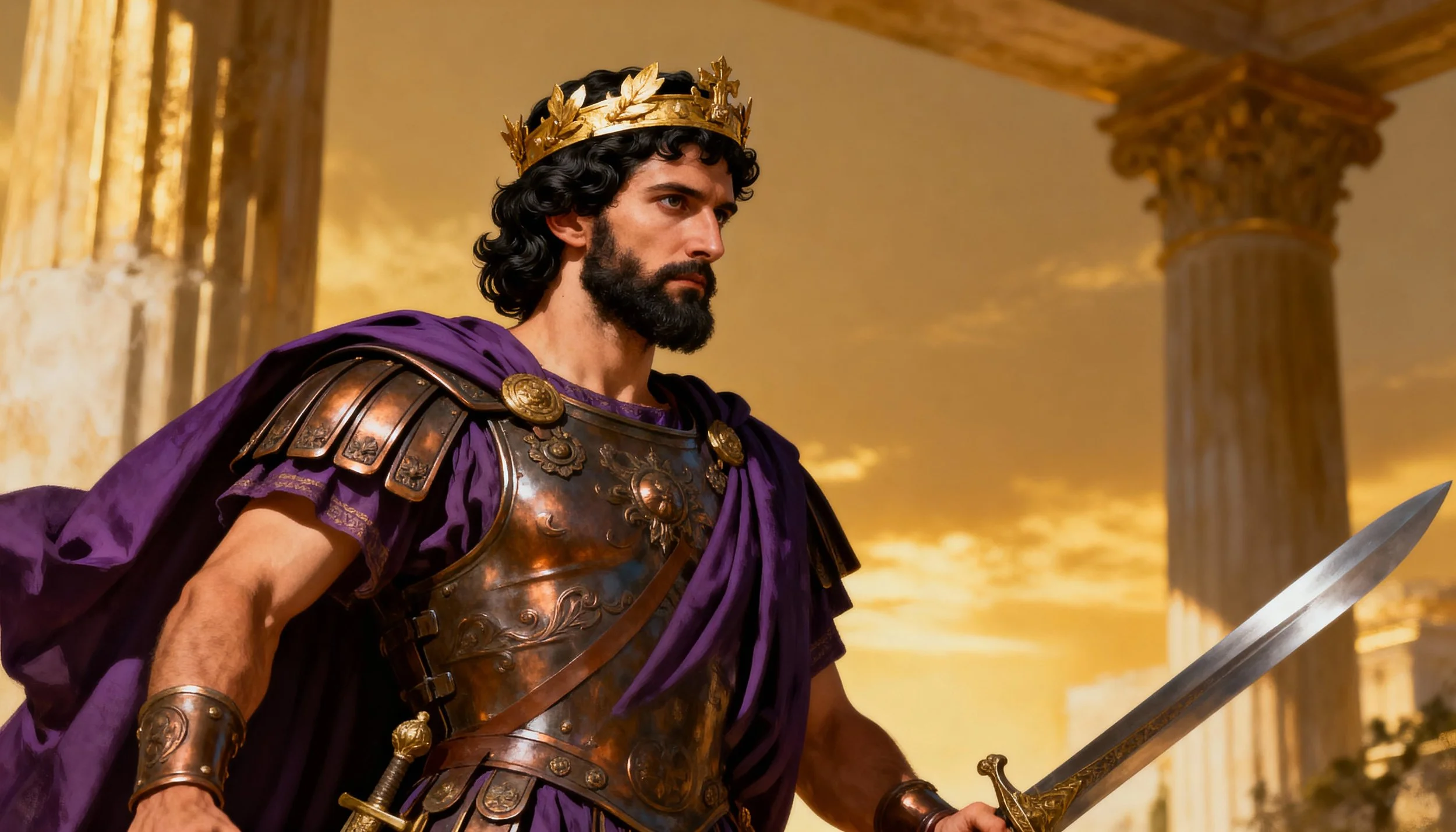
Artistic depiction of Julian
Civil war was coming, but fate stepped in: Constantius died on his way to the battle. In 360 CE, the survivor became the sole ruler of Rome.
The Intellectual War: "Against the Galileans"
Julian didn’t just want to reopen temples; he wanted to win the argument. He wrote a scathing book called Against the Galileans to show why he believed Christianity was a mistake. He used three main "logic bombs" to challenge the Church:
1. The "Local" God of the Hebrews
Julian argued that the God of the Bible wasn't a universal creator. He asked: if this God is the father of all people, why did he ignore the rest of the world for thousands of years? Why would a "universal" God restrict his laws to a tiny tribe in Palestine while leaving the rest of the human race to live in ignorance? To Julian, this proved the Jewish God was just one of many "national" gods, not the king of the universe.
2. A Lack of Achievement
He looked at history and asked a simple question: What has this tradition actually built? He pointed out that the pagan gods had granted Rome world-changing power and wisdom for two millennia. Meanwhile, the Hebrews had often lived as slaves or subjects. He mocked Christians for relying on "childish" stories while ignoring the courage and philosophy of the Greeks—wisdom that Christians ironically claimed was inspired by the devil.
3. The Great Hypocrisy
Julian’s sharpest critique was that Christians were "apostates" from everywhere. He argued they had abandoned the beauty of Greek culture, but they also refused to follow the actual laws of the Jews—like sacrifice and circumcision. He pointed to the Bible to show that Moses intended his laws to be eternal. He accused the Apostle Paul of "inventing" a new religion just to win converts, calling the whole movement "an insult to reason."
Julian's most famous move was a ban on Christian teachers. He forbade them from teaching the Greek classics. His logic was cutting: "If you don't believe in our gods, why are you teaching our books? If you think these authors are wrong about the divine, go back to your churches and teach Matthew and Luke."
“Did the pagan authors not receive all their learning from the gods? I think it absurd that Christians who explain the works of these writers should dishonour the gods whom the pagan authors honoured. If Christians feel that the pagan authors have gone astray concerning the gods, then let them go to their churches, and teach only Matthew and Luke”
By controlling the schools, he intended to ensure the next generation of elite Roman children would be raised as pagans. He used the term "Galilean" specifically to make the faith sound like a backwater, uncultured superstition from a provincial village.
The Failure of the "Pagan Church"
Julian had a strange problem: the Christians were better at being kind. He complained that the "impious Galileans" looked after not only their own poor but the pagan poor as well.
“ Baptism does not take away the spots of leprosy, nor the gout, nor the dysentery, nor any defect of the body… and also adultery, rapine, and all the crimes of the soul”
So, Julian tried to turn paganism into a "church." He told pagan priests they had to stop going to taverns and start acting morally. He told them they had to start giving to the poor. But the pagans didn't want a "Pagan Pope" telling them how to live. When he visited the famous Temple of Apollo at Daphne, expecting a crowd, he found only one old priest with a single goose to sacrifice. The fire was going out, and Julian was the only one left trying to fan the flames.
The Final Skirmish in Persia
In 363 CE, Julian led 80,000 men into the heart of Persia, hoping a massive victory would prove the old gods were still powerful. It was a disaster. He was lured too deep into enemy territory, and his supply lines were cut.
During a messy retreat, Julian heard a skirmish and rushed out to lead his men—forgetting to put on his armor. A spear caught him in the liver. That night, at just 32 years old, Julian died in his tent while debating philosophy with his friends.
The legend says his last words were, "Thou hast conquered, Galilean." Whether he said it or not, the sentiment was true. With his death, the last pagan light in the Roman Empire went out. His successor was a Christian, the temples were closed for good, and the world moved on.
But for two years, because of one man’s childhood resentment and a love for old books, the history of the world almost went in a completely different direction.