
The Inland Customs Line in Colonial India
I. Introduction: The Fiscal Geography of Colonial Salt
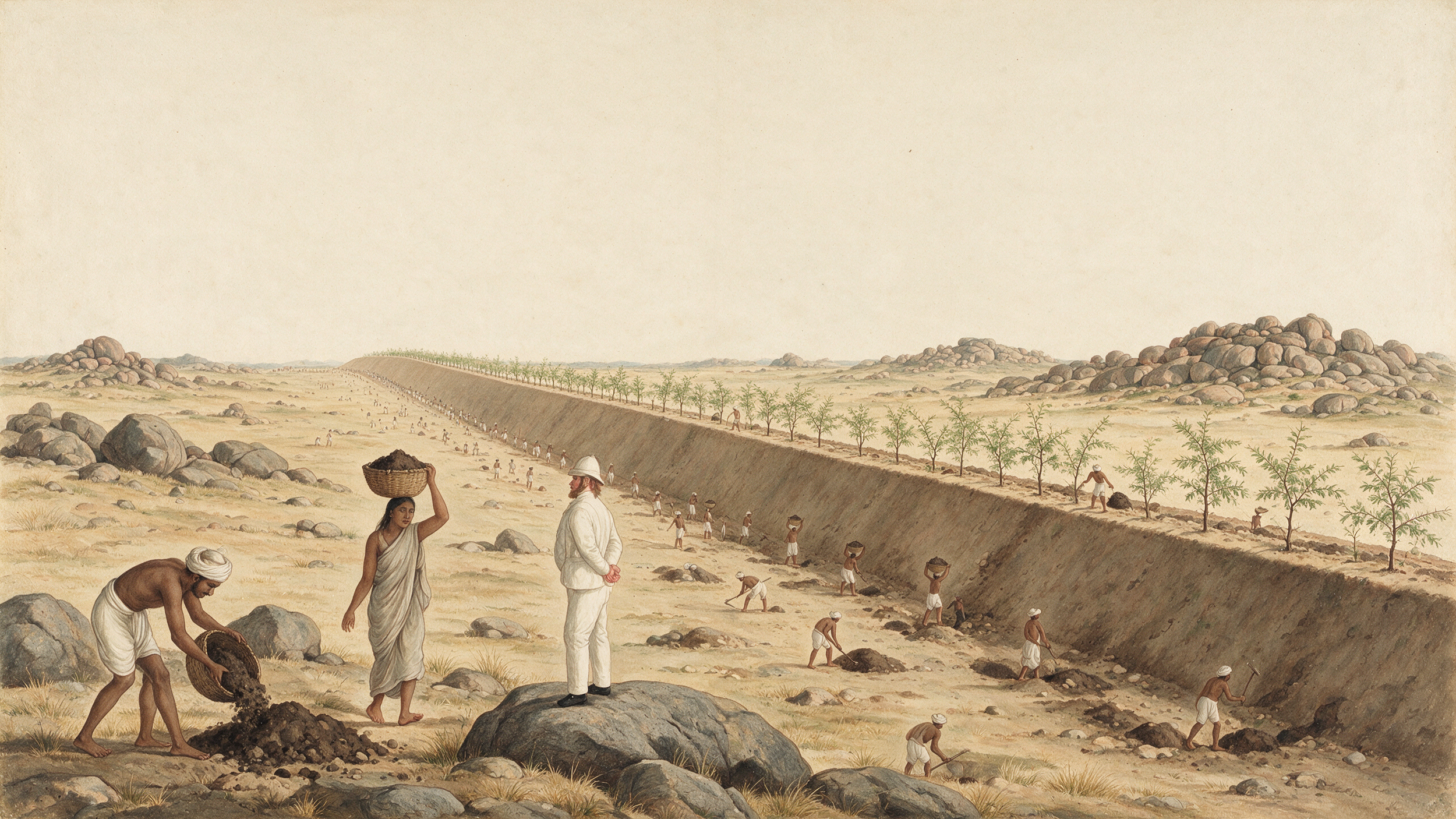
In late 1869, Sir John Strachey, then serving as a senior administrator in the Government of India, surveyed the administrative geography of the Raj and remarked upon an apparatus without contemporary parallel. A customs barrier stretched across the Indian subcontinent:
"A customs line was established which stretched across the whole of India, which in 1869 extended from the Indus to the Mahanadi in Madras, a distance of 2,500 miles, and it was guarded by nearly 12,000 men. It would have stretched from London to Constantinople. It consisted principally of an immense impenetrable hedge of thorny trees and bushes." [1]
The barrier did not defend a national frontier or deter a hostile foreign army. Instead, it was an internal tariff wall designed to enforce regional price disparities on a common mineral commodity: edible sodium chloride.
Under Company rule and subsequently under the British Crown, colonial India was partitioned into disparate fiscal enclaves. The Bengal Presidency had inherited and deepened the monopolistic salt excise established under Robert Clive in 1765 [2]. The colonial state taxed Bengal's salt at rates reaching over twenty times its raw production cost, netting substantial revenue for the government treasury.
The resulting duty schedule created steep geographical gradients. In Lower Bengal, whether salt was imported by sea or manufactured locally, the state imposed a duty of three rupees and four annas (3.25 rupees) per Indian maund, a standard administrative weight of approximately 82.2 pounds. In the neighboring North-Western Provinces, the tariff was set at three rupees flat per maund. South and west of these territories, the Madras and Bombay Presidencies operated under a substantially lighter rate of one rupee and thirteen annas (roughly 1.81 rupees) per maund.
Meanwhile, across the political border in the independent princely states of Rajputana, specifically around the natural brine depression of Sambhar Lake, administered jointly by the courts of Jaipur and Jodhpur, salt was shovel-harvested at an extraction cost of merely two annas per maund, with the local rulers levying only minimal transit royalties [3].
Had commerce moved unhindered, inexpensive salt from Rajputana, Madras, and Bombay would have flooded into the North-Western Provinces and the Gangetic plains, undercutting the revenue extracted from Bengal's consumers. Faced with this arbitrage, the British government chose not to lower the tax in Bengal, which would have diminished returns to the treasury. Nor could the Crown unilaterally impose excise duties within sovereign princely states without treaty concessions.
The colonial state instead constructed a physical cordon sanitaire across the middle of the subcontinent to arrest unbonded salt before it crossed into the Bengal tariff zone [4].
Between the 1840s and 1879, this cordon developed into the Inland Customs Line, centered along a continuous vegetative obstruction known to British officials simply as "the Hedge." Despite its continental scale and the deployment of over twelve thousand armed guards, the Hedge disappeared rapidly from imperial historiography following its abolition on April 1, 1879. The standard nineteenth- and twentieth-century imperial compendia, including the comprehensive volumes of the Oxford History of India and the Cambridge History of India, made no meaningful mention of the botanical wall [5].
The material reality of the barrier remained largely unexamined until the archival investigations of British researcher Roy Moxham in the late 1990s recovered the administrative reports of the Inland Customs Department from the collections of the British Library [6].
II. Administrative Origins and Geographic Trajectory
The customs line developed incrementally from local tax collection posts into an interconnected continental barrier. During the early decades of the nineteenth century, the East India Company operated isolated inland customs chaukis along major rivers, trade roads, and district borders across northern India. Smugglers avoided these isolated pickets by leading camel strings and pack bullocks across unfrequented dirt tracks and through unmonitored scrubland [7].
To counter this avoidance, the administration linked the disparate collection points into a continuous defensive cordon during the tenure of Lord Ellenborough in 1843 [8]. The resulting North-Western Inland Customs Line initially tracked the frontier between the North-Western Provinces and the princely territories of Bundelkhand and Rajputana. Over the next two decades, territorial acquisitions and administrative consolidations extended the barrier in both directions.
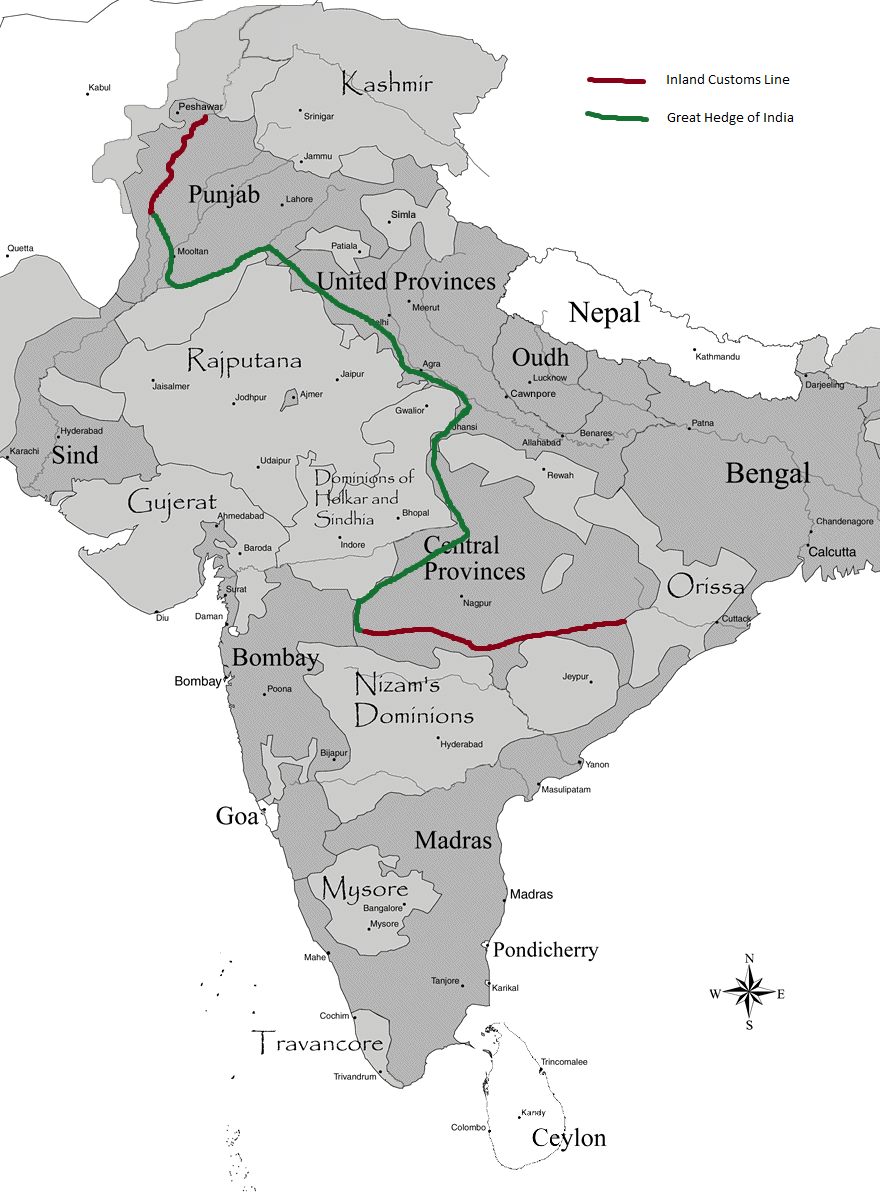
By 1870, the line began in the northwest near Torbela on the Indus River in the Punjab. It skirted the base of the Himalayas, turned southward across Delhi and the Doab, traversed the ravines of the North-Western Provinces and Central India, and ran eastward across the Central Provinces before terminating on the banks of the Mahanadi River near the borders of Orissa [9].
This geographical line separated more than 130 million residents of the Bengal Presidency and adjacent British-administered territories from the cheaper salt of Central India, the western deserts, and the coastal south [10].
For operational command, the Inland Customs Department partitioned the 2,500 miles of border into regular administrative divisions: Punjab, North-Western Provinces, and Central Provinces. These jurisdictions were subdivided into Collectorates, Patrol Sections, and Beats [11]. Beat chowkis stood at intervals of approximately one mile. The intermediate frontier was maintained under surveillance through permanent pickets and mobile patrols operating along an artificially cleared military path run parallel to the boundary [12].
Every wagon road, bridle path, and navigable waterway crossing the line required a formal customs gate. At these authorized chaukis, designated customs peons inspected commercial cargoes, weighed packages against written manifests, collected customs dues, and stamped cleared goods with lead seals. Any traveller attempting to traverse the perimeter at an intermediate point was deemed a contrabandist and subjected to summary arrest under the prevailing inland customs statutes [13].
III. Silvicultural Engineering: Building and Growing the Barrier
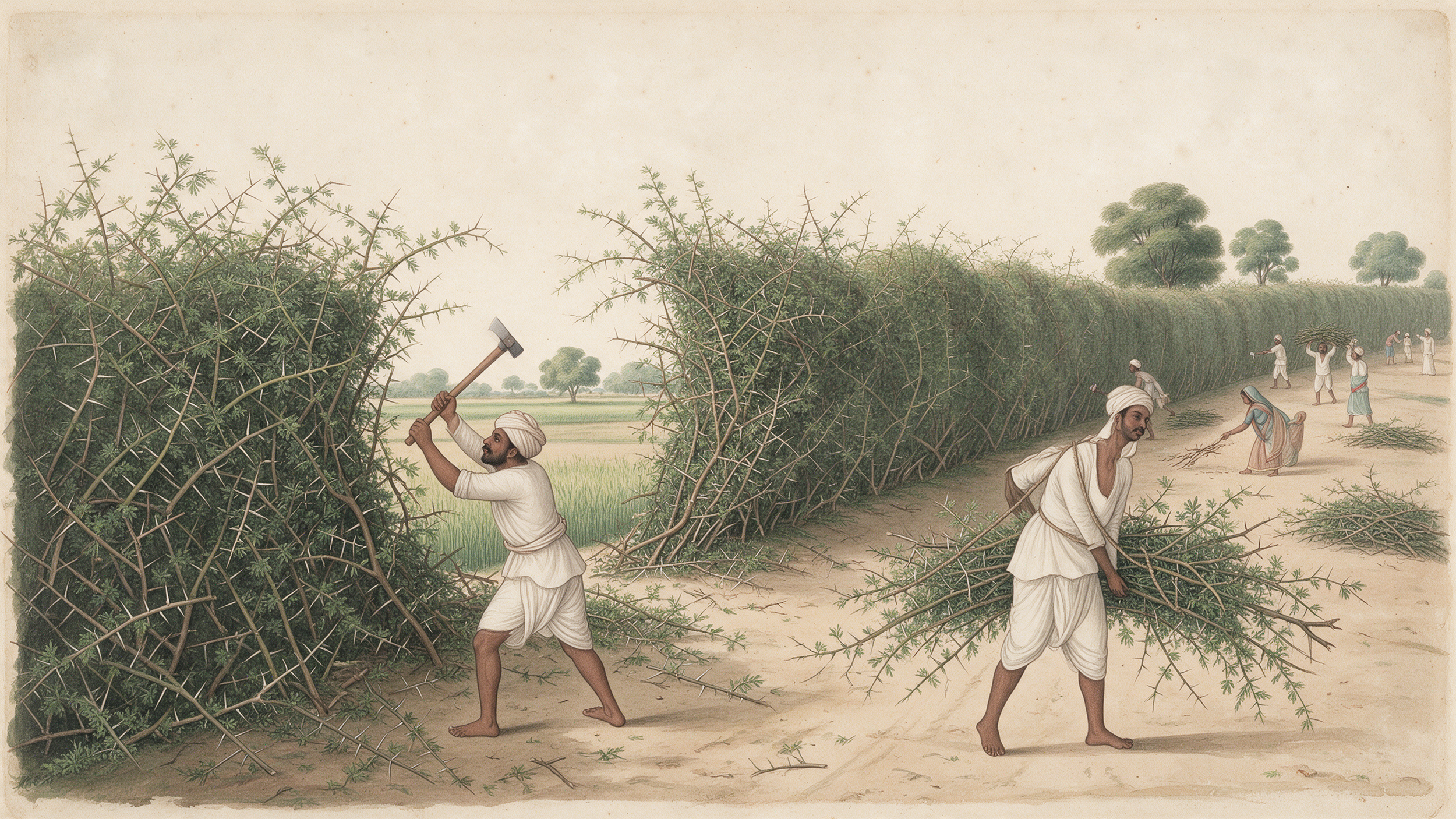
Maintaining thousands of miles of barrier presented serious mechanical problems. In its early decades, the barrier consisted primarily of a "dry hedge." Indian labourers, working under colonial customs overseers, cut hundreds of thousands of tons of thorny wild shrubs—principally wild babool (Acacia nilotica), ber (Ziziphus mauritiana), and camel-thorn (Alhagi maurorum)—and staked the dead branches into trenches [14].
The dry hedge, however, was temporary and unstable. The severed thorn deteriorated under the monsoon rains, succumbed to termite infestation, and was frequently blown across the fields by summer dust storms (aandhis). More dangerously, dry brushwood during dry seasons was susceptible to fire. Grass fires ignited by local farmers clearing agricultural stubble, sparks from passing caravans, or deliberate arson by smugglers regularly consumed miles of dried barrier within hours [15]. Rebuilding the dead barricade required a continual logistical effort:
"The dry hedge required the labour of Sisyphus... they gathered and carried more than 150,000 tons of thorny material for the dry hedge." [16]
Recognizing the cost of gathering and replacing dry timber every season, colonial administrators attempted to transform the dry barricade into a living botanical wall. In 1867, Allan Octavian Hume assumed control of the department as Commissioner of Inland Customs [17]. Hume was an energetic administrator with a keen interest in botany and ornithology. He determined that the Inland Customs Department would replace the decaying dead brushwood with a dense, living wall of thorny vegetation along the entire line [18].
Transforming a 2,500-mile line into an unbroken living hedge across disparate regional ecosystems required extensive agronomic experimentation. Soil conditions varied from the shifting sands of southern Punjab to the heavy black cotton soils (regur) of Central India, the hard red laterite of Bundelkhand, and the rocky gorges of the Vindhya range [19].
Hume selected several hardy, thorny plant species tailored to specific regional geologies. The primary structural framework across the alluvial loam and clay soils of the Gangetic plains and the Doab was formed by Acacia nilotica (known locally as babool or kikar), whose hard wood and long spines formed an unyielding physical thicket. In arid, sandy scrub tracts, officers planted Ziziphus nummularia (jharberi) alongside dense clumps of Opuntia dillenii (nagphani, or prickly pear). In rocky, nutrient-poor hills where taproots struggled to penetrate, the department planted Euphorbia royleana (thohar) and thorny Carissa carandas (karonda). Along low-lying riverbanks and moist ravines, lines of dense thorny bamboo (Bambusoideae) were established [20].
The physical cultivation required sustained earthmoving. In low-lying, waterlogged tracts, monsoon inundations rotted the seedlings' root systems. Here, customs peons had to raise substantial earth embankments several feet above grade before sowing seed. In arid and stony tracts where roots could not take hold, workers excavated linear trenches down to soft strata, carried fertile topsoil in baskets across miles of terrain, and backfilled the trenches before planting. To provide water for seedlings across regions with prolonged summer droughts, labourers dug roadside catchment canals and sank unlined irrigation wells (kuchha wells) along the hedge perimeter [21].
By the early 1870s, Hume's systematic regime achieved considerable success. In the official Report on the Administration of the Inland Customs Department for 1870–71 to 1872–73, Hume recorded the dimensions of the barrier. The cultivated living hedge had reached a total length of 1,114.5 miles, supplemented by several hundred miles of dry hedge, stone wall, and ditch works [22].
Within this vegetative system, the department classified the barrier into distinct structural grades. A total of 448.75 miles was catalogued as "perfect live hedge," representing fully matured, impenetrable vegetation between eight and twelve feet in height and four to six feet in width. Another 233.5 miles was registered as developing live hedge, which formed a dense barrier but still required infill planting. Immature live hedge, consisting of young saplings under active cultivation, accounted for 432.25 miles. The remaining segments of the 2,500-mile perimeter were composed of 941 miles of dry thorn hedge, 388.5 miles of dry stone walling, mud banks, and excavated ditches, and 56 miles of natural riverine or impassable hill country [23].
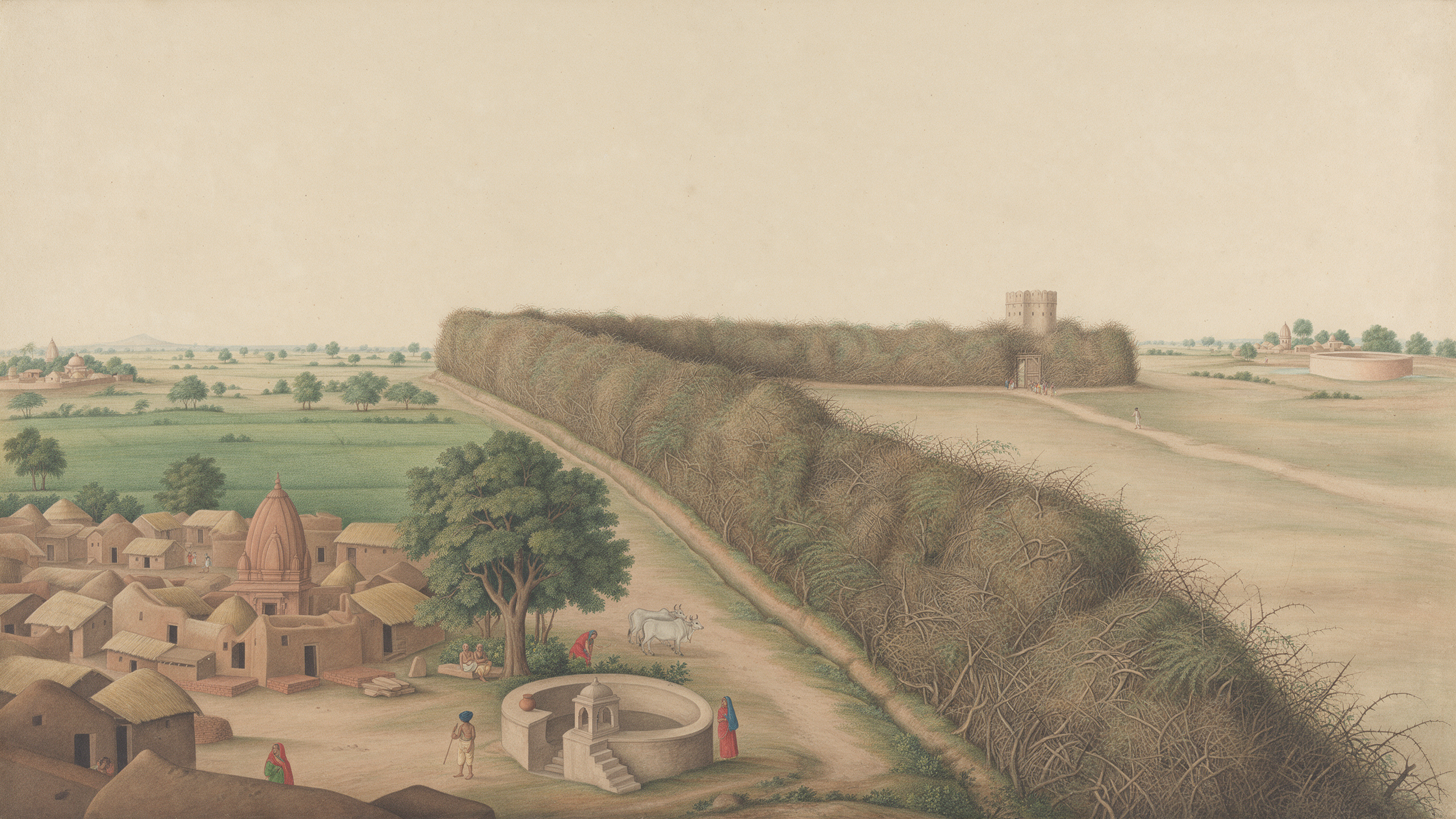
Where the live hedge was classified as "perfect," its intertwining branches, laced with cactus and thorn, formed a barrier that neither cattle nor humans could push through without edge tools. In the Agra Division, the department maintained a nearly unbroken living wall:
"The hedge is nowhere less than eight feet high and four to five feet thick... Agra Division perfect throughout, half being live hedge." [24]
On the ground, this perimeter was arranged as a defensive cross-section. On the outer side facing the untaxed princely states, the approach of unbonded caravans was monitored across open scrub. The central line consisted of the live thorn hedge itself, planted alongside an excavated drainage and obstacle ditch. On the inner side, facing into British territory, the department maintained an artificially cleared patrol path twenty to thirty feet wide. Sentry watchtowers were erected along this cleared path at one-mile intervals, giving armed guards an open field of view to intercept anyone breaking through the vegetative mass [25].
Maintaining this botanical structure was an ongoing struggle against local pests and climate. Severe winter frosts in the plains killed young babool saplings across Jhansi and Lalitpur. Summer dust storms buried young plantings in drift sand, and monsoon floods undermined roots. Large populations of field rats (Nesokia indica) dug into the earthworks, severing roots and destabilizing mature plants. In response, local patrol officers devised pragmatic countermeasures. In the Chirgaon Patrol, the local officer recorded an unorthodox solution to the rodent problem:
"[The officer] has let loose a number of wild cats in his hedge, whose presence has cleared the place of these destructive animals to some extent." [26]
Where the line climbed over steep quartz ridges or rocky bluffs that could not support plant life, the department abandoned botany for masonry. In portions of Central India, Indian workers constructed three-quarters of a mile of continuous dry stone walling, seven feet high and four feet broad, with thorn bushes tied along the top [27].
iV. The Human Apparatus: Labor, Surveillance, and Corruption
The botanical barrier could not function on its own; it was part of an extensive policing system. At the height of its operations in the early 1870s, the Inland Customs Department employed an enforcement corps of roughly 12,000 to 14,000 men [28].
The operational command followed a rigid paramilitary hierarchy. At the summit sat the Commissioner of Inland Customs, stationed in Agra and Simla, reporting directly to the Viceroy's Council. Beneath him served British Collectors of Customs drawn from the Indian Civil Service, who supervised territorial divisions. Field operations fell to Assistant Commissioners, chiefly European inspectors, who oversaw Patrol Officers and Indian jemadars. At the bottom of this pyramid stood more than twelve thousand Indian customs peons (chaprasis), who performed the daily sentry work and manual upkeep [29].
These peons were armed with lances, wooden truncheons, and sabers, and were tasked with constant sentry duty. Sentry posts stood at one-mile intervals along the line, positioned to maintain line-of-sight contact with adjacent pickets. Peons patrolled the twenty-foot path cleared along the inner boundary of the hedge, scanning the cleared sand for footprints or damaged vegetation [30].
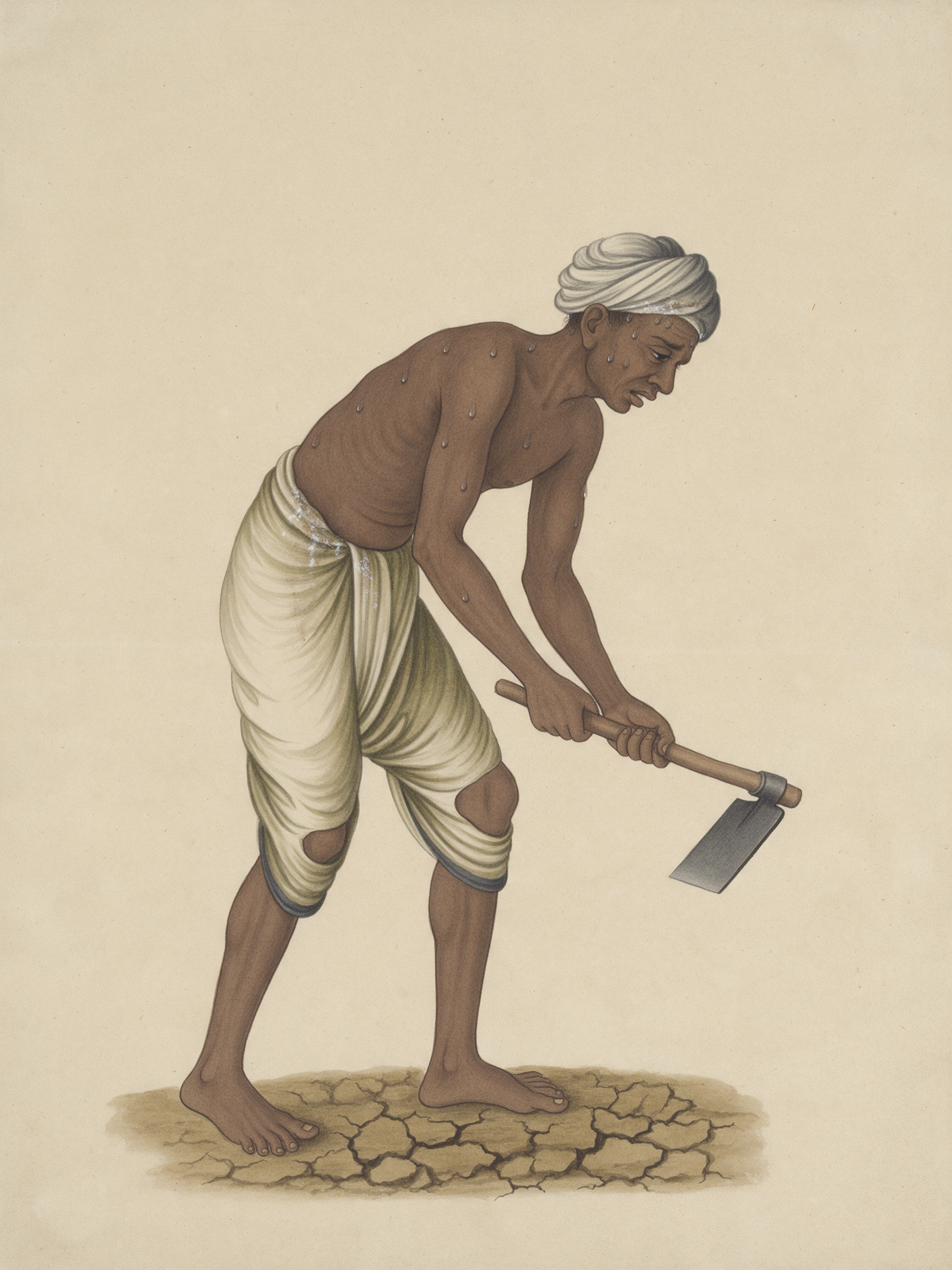
The physical demands on the customs peons were substantial. Sentry details endured severe seasonal weather: the hot, dry winds of the northern Indian summer, the cold nights of the Punjab winter, and monsoon downpours. Peons were responsible not only for sentry duty but also for the manual work of maintaining the hedge. They pruned dead wood, cleared dried brush, and hauled water and manure to young plantings along their beat. Commissioner Hume acknowledged these demands in his official reports:
"There is no large body of men in the world from whom so much unintermitting and hard labour is required." [31]
Recruitment policies within the lower ranks reflected contemporary colonial strategies of social fragmentation. Archival returns illustrate that the administration preferred to recruit men from communities outside the districts through which the hedge ran [32]. In northern and central India, where the surrounding peasantry was predominantly Hindu, the department frequently enlisted Muslim, Afghan, or Punjabi recruits. These guards shared few regional or cultural ties with the local population, making them less likely to assist local smugglers. Peons were routinely moved between patrol beats every few months to prevent them from establishing connections with village headmen or border merchants [33].
The colonial state also restricted family life along the customs frontier. Regulations largely barred lower-grade peons from maintaining permanent domestic dwellings or residing with their wives within the isolated guard outposts. Administrators believed that domestic quarters along the border would distract guards, foster contact with nearby villagers, and complicate regular rotations across different sectors of the line [34].
Pay for the lower ranks remained modest. A customs peon typically earned between four and five rupees a month. Out of these wages, the guard had to purchase his own rations, maintain his uniform, and provide for family members left in distant ancestral villages [35]. Because basic living costs along the frontier frequently matched or exceeded these earnings, many guards faced severe financial distress. To incentivize vigilance, the administration paid cash bounties tied to contraband seizures. Informers and apprehending officers received a proportion of the value of confiscated salt and draught animals, along with a share of the fines imposed by local magistrates on convicted smugglers [36].
This incentive structure encouraged coercion and extortion. Armed peons intercepted villagers walking to market, slit open grain sacks with blades under the pretext of searching for concealed salt, and detained rural travelers for hours. The daily lives of border communities were substantially disrupted. If an agricultural field or ancestral village was divided by the hedge, peasants were forced to walk several miles out of their way to pass through an authorized, manned gate. At these checkpoints, low-paid customs peons regularly extracted informal transit fees (dastur) from travelers carrying mundane household goods [37].
The line reduced large-scale smuggling but did not eliminate it. The wide disparity in salt prices across the barrier sustained a lucrative contraband trade that adopted diverse operational tactics. Impoverished head-load runners carried forty- to sixty-pound bundles through uncultivated scrub, throwing their packages over the thorny thicket into waiting ditches at night. Commercial carriers attempted concealment, hiding unbonded salt beneath wagonloads of manure, straw, or timber passing through formal gates. Along waterways, smugglers floated raw salt downstream inside sealed animal skins under cover of darkness.
In more organized operations, armed merchant convoys deployed strings of camels and pack bullocks to force transit across remote patrol beats [38].
Official records confirm the volume of illicit trade. In 1847 alone, customs courts convicted more than 6,000 individuals for illegal salt trafficking [39]. Most of those arrested were not wealthy ringleaders, but impoverished day-laborers paid a few annas to carry a headload of salt through the thorn bush under cover of darkness. When intercepted by armed sentries, salt-runners faced summary seizure of their goods, heavy fines, and imprisonment with hard labor. When smugglers resisted, confrontations in the ravines and scrub along the line frequently resulted in fatal injuries to guards and carriers alike [40].
V. Physiological Deprivation and the Socio-Economic Toll
While the customs apparatus succeeded in protecting state revenues, it had serious physical consequences for the population living behind it. Sodium chloride is essential to human survival. The adult human body requires a steady intake of dietary salt to maintain blood volume, regulate cellular osmotic pressure, sustain cardiac rhythm, and enable nerve transmission. In temperate climates with moderate physical exertion, this requirement is easily met.
In the semi-arid, subtropical climate of northern and central India, however, salt loss increases dramatically. Manual labourers working in open fields during the summer months at temperatures exceeding 40°C regularly sweat up to two liters of water an hour, losing considerable quantities of sodium [41].
When systemic sodium loss is not replaced through diet, the human body enters a state of chronic hyponatremia. The clinical progression begins with debilitating muscular cramps and physical fatigue, develops into hypotension and circulatory collapse, and ends in kidney failure or death. Under the colonial tariff regime, the poorest sections of the Indian peasantry were pushed well below the minimum threshold of physiological safety [42].
In the agricultural districts of the Bengal Presidency, an agricultural laborer earned approximately two rupees per month. Under the prevailing duties and merchant markups, the salt required to maintain a family cost nearly two months' total wages [43]. As a result, millions of peasants sharply curtailed their salt consumption. Rural families were forced to scrape bitter, impure efflorescences (reh or khari) from barren alkali soils to season their food. These saline crusts, contaminated with sodium sulfate, magnesium sulfate, and potassium nitrate, induced chronic gastrointestinal illness and weakened immune responses [44].
The colonial administration was aware of this widespread deprivation. In 1869, Commissioner Hume conducted an empirical statistical survey comparing per capita salt consumption across different regions of northern and central India. The findings, submitted directly to the Viceroy, documented the sharp drop in consumption behind the customs barrier.
Hume recorded that in the independent princely states where salt remained untaxed, annual per capita consumption stood between thirteen and fifteen pounds. In British-administered Madras and Bombay, where excise duties were moderate, consumption ranged from twelve to fourteen pounds per head. By contrast, inside the Bengal Presidency behind the Great Hedge, annual per capita intake fell to between seven and a half and eight pounds—a fraction of the contemporary British domestic standard of twenty to twenty-four pounds per person [45].
Despite documenting that the barrier forced millions of imperial subjects into chronic sodium deprivation, Hume did not recommend reducing the salt tax. Instead, he argued for continued agronomic improvements to make the living barrier completely impenetrable, ensuring that state revenues did not falter [46].
The consequences of this policy extended into rural animal husbandry. Cattle, draught bullocks, and milk cows depend on supplemental sodium to maintain muscle mass, sustain draught power, and lactate. Impoverished peasants, unable to purchase clean salt for their own families, withheld the mineral from their livestock. Throughout the 1860s and 1870s, veterinary officers reported widespread debility and high mortality rates among working cattle in the North-Western Provinces, undermining agricultural productivity across the countryside [47].
This institutionalized deprivation had lethal effects when famine struck. During the Great Famine of 1876–1878, drought and crop failures left millions of rural Indians without food across southern and western India, extending into parts of the north [48]. Rather than suspending the salt tax to assist the starving population, the government increased duties in southern India to bring regional rates closer to Bengal's higher tariff [49].
When cholera swept through famine camps and rural villages, the lack of dietary salt proved catastrophic. Cholera causes massive fluid and electrolyte loss through acute diarrhea and vomiting. Without salt, oral rehydration cannot occur, and patients collapse from hypovolemic shock within hours. The British salt monopoly and the customs line turned a treatable gastrointestinal infection into a death sentence for hundreds of thousands of people [50].
The human suffering caused by the salt tax was debated in the British Parliament. In January 1878, Member of Parliament Henry Fawcett introduced a formal resolution in the House of Commons criticizing the government's fiscal policy in India:
"The salt tax was a duty on the first necessary of life, and its increase was particularly oppressive to the poorest classes of the people... The financial condition of India could not be considered satisfactory when it was necessary to raise revenue by such means." [51]
VI. The Indian Press and Vernacular Resistance
Colonial newspapers in India, both vernacular and bilingual, maintained steady criticism of the Inland Customs Line and its accompanying salt duties. Because open criticism of the administration was monitored under government press scrutiny, editors framed their coverage around issues of peasant hardship, administrative corruption, and commercial interference [52].
Weekly digests preserved in the records of the India Office show widespread popular opposition to the customs barrier. Rather than seeing the hedge as an efficient administrative instrument, Indian writers described it as an oppressive apparatus that disrupted rural commerce and made government peons arbitrary masters of the roads.
In March 1877, as the government moved to shut down local salt manufacturing in Rajputana to centralize production under British supervision, the Panjabi Akhbar reported on the deep anxiety felt across the princely courts and among the rural working class:
"[The Darbar's officers] look upon this as an encroachment, and fear that the Government may in course of time begin to interfere in other departments also, such as the judicial, the executive... [The state cared less for its own revenues than] for the poor manufacturers of salt who will be deprived of their means of livelihood." [53]
In Bengal, the Bhárat Mihir condemned the rhetoric surrounding the dismantling of the barrier. Colonial officials claimed that equalizing salt duties was an enlightened economic reform that reduced tariffs for ordinary consumers. The paper noted that nominal rate reductions were absorbed by middlemen, leaving rural peasants in poverty:
"If the abolition of the customs line was really deemed necessary in the interests of civilization, it would be better to wait for a more convenient opportunity. The reduction of the salt duty has not in the least benefited the country or the poor. They are not even aware that the salt duty has been reduced." [54]
By late 1879, following the line's dismantling, vernacular publications treated its disappearance with relief. Writing on December 23, 1879, the Cawnpore paper Shola Túr noted that whatever other controversies surrounded the Viceroy's administration, the public was thankful that he had:
"...abolished the customs line, which was a source of great inconvenience and harassment to the public." [55]
VII. Abolition, Modern Extraction, and Erasure
By the late 1870s, the Customs Line faced mounting criticism inside the British government. Sir John Strachey, appointed Finance Member of the Viceroy's Council in 1876, concluded that maintaining an armed border across northern India had become an administrative liability. Strachey described the barrier as a relic of pre-modern fiscal management:
"[A] monstrous system to which it would be almost impossible to find a parallel in any other country... It was an abomination." [56]
Strachey's objections were grounded in fiscal pragmatism rather than humanitarian concern. By 1878, maintaining twelve thousand armed guards, supervisory staff, and miles of vegetative barriers cost nearly two million rupees annually. Smuggling continued along the edges of the line, while rapid railroad construction throughout northern India fundamentally altered the economics of transport [57].
The expansion of the Indian railway network made a botanical perimeter barrier both impractical and unnecessary. Freight trains carried commercial salt across provincial borders in hours, easily crossing through customs chaukis at fixed track crossings. If customs peons halted every train to unload, weigh, and inspect thousands of bags of salt, the entire rail network would grind to a halt [58].
The administration resolved this problem by shifting from perimeter enforcement to extraction at the point of origin. Between 1869 and 1878, British diplomats pressured the maharajas of Jaipur and Jodhpur into signing treaties that transferred Sambhar Lake and its surrounding salt beds to exclusive British control in exchange for fixed annual compensation [59]. Similar administrative agreements secured control over the coastal saltworks of Gujarat, the salt deposits of Kutch, and the Mayo Salt Mines in the Salt Range of Punjab.
Once the colonial state owned the salt sources, perimeter interdiction was no longer required. The government laid rail spurs directly into the dry lakebed at Sambhar, running wagons alongside the harvesting pans. British officers weighed the salt and assessed the customs excise at the lake before freight cars were sealed and dispatched onto the mainline network. The tax was incorporated directly into freight charges and wholesale prices, ensuring that every bag of salt leaving the site carried the imperial duty, regardless of its destination in India [60].
To complete this system, the administration standardized tax rates across all presidencies. In 1878, the salt tax in northern India was lowered slightly, while duties in Madras and Bombay were raised. This eliminated the price disparities that had sustained the illicit trade across provincial borders [61].
On April 1, 1879, Commissioner W. S. Halsey issued the executive order abolishing the Inland Customs Line:
"The Inland Customs Line was abolished on the 1st of April 1879... Reductions in establishment took place in all grades, from that of Collector downwards, with the abolition of a number of guard posts in the Panjab, North-Western Provinces, and Central Provinces." [62]
The department discharged more than twelve thousand Indian guards, disbursing roughly 70,000 rupees in severance gratuities from the Agra treasury [63]. A single minor division along the Indus River was maintained to collect duties on rock salt leaving the Kohat district; elsewhere, the line ceased operations overnight.
The Great Hedge decayed rapidly once regular maintenance ended. When sentries left their posts, local farmers dismantled the barrier. Over several years, peasants cut down the mature babool and karonda trees for firewood. Villagers carried branches away to fence their homesteads and protect crops from wild animals. Cultivators ploughed up the cleared border path, planted grain across the excavated trenches, and incorporated the land into local farms [64].
Later infrastructure projects erased the remaining traces. Because the customs perimeter was well-surveyed, level, and held clear government title, public works engineers used the old right-of-way to build new metalled roads, canal easements, and telegraph lines [65]. The botanical wall was absorbed back into the north Indian landscape.
The speed with which the barrier disappeared from public memory was reinforced by shifts in imperial governance. The Great Hedge had become an embarrassment to British administrators, an awkward reminder of fiscal coercion that clashed with the late-Victorian image of benevolent modernization through railways, canals, and law courts. Government libraries in India and Pakistan weeded their administrative files, discarding the bulky annual reports of the Inland Customs Department [66].
Allan Octavian Hume's own career reflected this transition. After being removed from his position as Secretary to the Government of India in 1879 following disagreements with Viceroy Lord Lytton, Hume retired to the hill station of Simla [67]. He turned away from fiscal administration, immersed himself in ornithology, and established contacts with educated Indian reformers. In December 1885, Hume was instrumental in organizing the inaugural session of the Indian National Congress at Gokuldas Tejpal Sanskrit College in Bombay [68].
Historical memory remembered Hume almost entirely for his second act, memorializing him as a liberal Scotsman who supported Indian political representation. His twelve years developing an aggressive internal customs barrier faded from mainstream accounts of modern Indian history [69].
VIII. Historiographical Recovery and the Persistence of the Salt Monopoly
The memory of the Inland Customs Line was preserved mainly in imperial memoirs and second-hand accounts. In 1995, Roy Moxham encountered a brief footnote referencing the barrier while reading an annotated edition of Major-General William Sleeman’s nineteenth-century memoir, Rambles and Recollections of an Indian Official [70]. Surprised that such a structure was absent from modern histories of the Raj, Moxham pursued the reference through the India Office Records in the British Library [71].
There, Moxham located the surviving annual administrative reports of the Inland Customs Department. Guided by nineteenth-century district revenue surveys and Survey of India sheets, he undertook a series of field expeditions across northern India to trace the route of the barrier [72].
Through fieldwork in the ravines and agricultural villages of Etawah District in Uttar Pradesh, Moxham identified small living remnants of the barrier. Near the village of Chhachhund, he located an elevated earthen embankment overgrown with mature, thorny Carissa carandas bushes and old babool trees, matching the route and composition recorded in Hume's 1872 report [73]. These scrub lines were among the last surviving sections of the 2,500-mile barrier.
The abolition of the Great Hedge in 1879 did not dismantle the salt tax. Instead, the administrative shift demonstrated that point-of-origin extraction was far more lucrative than maintaining a physical botanical barrier. The state derived millions of pounds in annual revenue from the revised salt excise through the late nineteenth and early twentieth centuries [74].
Because the tax remained intact, salt continued to be a persistent grievance across colonial society for decades after the hedge was uprooted. The physical barrier of thorns and sentries had disappeared from the land, but the administrative monopoly it was planted to protect remained an enduring pillar of imperial finance until the end of British rule.
ENDNOTEs
[1] Sir John Strachey and Lieut.-Gen. Richard Strachey, The Finances and Public Works of India from 1869 to 1881 (London: Kegan Paul, Trench & Co., 1882), 219–220, as quoted in Roy Moxham, The Great Hedge of India: The Search for the Living Barrier that Divided a People (London: Constable & Robinson, 2001), 11–13.
[2] Select Committee of the House of Commons, Second Report on the Affairs of the East India Company (London: House of Commons, 1812), 24–28; see also Romesh Chunder Dutt, The Economic History of India under Early British Rule (London: Kegan Paul, Trench, Trübner & Co., 1902), 142–145, as quoted in Moxham, The Great Hedge of India, 34–36.
[3] Government of India, Report on the Administration of the Inland Customs Department for the Official Year 1869–70 (Calcutta: Superintendent of Government Printing, 1870), 12–16; see also S. C. Aggarwal, The Salt Industry in India (Delhi: Government of India Press, 1956), 68–74, as quoted in Moxham, The Great Hedge of India, 45–51.
[4] Allan Octavian Hume, Report on the Administration of the Inland Customs Department for the Year 1867–68 (Calcutta: Office of Superintendent of Government Printing, 1868), 3–7, as quoted in Moxham, The Great Hedge of India, 58–61.
[5] Roy Moxham, interview by Vishnupuram Literary Circle, transcript and video record, recorded 2021, timed archive section 31:25–32:05. Moxham confirmed that neither Vincent Smith's The Oxford History of India (Oxford: Clarendon Press, 1919) nor The Cambridge History of India, ed. H. H. Dodwell (Cambridge: Cambridge University Press, 1932) contained any index entry or narrative reference to the Great Hedge or the Inland Customs Line.
[6] Moxham, The Great Hedge of India, 15–24.
[7] Major-General Sir W. H. Sleeman, Rambles and Recollections of an Indian Official, ed. Vincent A. Smith (London: Henry Frowde / Oxford University Press, 1893 [orig. pub. 1844]), 78n1, as quoted in Moxham, The Great Hedge of India, 9–10.
[8] Lord Ellenborough, Governor-General of India, Notification of the Financial Department, 13 March 1843, Fort William, Calcutta; see also Inland Customs Report, 1870–71 to 1872–73 (Calcutta: Superintendent of Government Printing, 1872), 2–5, as quoted in Moxham, The Great Hedge of India, 52–54.
[9] Inland Customs Department, Route Map of the Imperial Customs Line Across India, 1870 (Agra: Inland Customs Press, 1870; holdings in British Library, APAC, IOR/V/24/1102), as reproduced and cited in Moxham, The Great Hedge of India, map insert and 65–68.
[10] Strachey and Strachey, Finances and Public Works of India, 221–223, as quoted in Moxham, The Great Hedge of India, 71–73.
[11] Report on the Administration of the Inland Customs Department, 1870–71 to 1872–73 (Calcutta: Superintendent of Government Printing, 1872), 8–11 (holding available via Internet Archive, id: india.history.resource.108543), as quoted in Moxham, The Great Hedge of India, 78–80.
[12] Hume, Inland Customs Report, 1870–71 to 1872–73, 14–16, as quoted in Moxham, The Great Hedge of India, 82–84.
[13] Act XIV of 1843 (Inland Customs Act, Government of India), sections 4–9; and Act VIII of 1875 (The Indian Inland Customs Act), sections 12–18, as quoted in Moxham, The Great Hedge of India, 86–88.
[14] Hume, Inland Customs Report, 1868–69, 22–26, as quoted in Moxham, The Great Hedge of India, 91–93.
[15] Report on the Administration of the Inland Customs Department, 1870–71 to 1872–73, section headed "HEDGE," 32–34, as quoted in Moxham, The Great Hedge of India, 94–96.
[16] Allan Octavian Hume, Commissioner of Inland Customs, Inland Customs Administration Report, 1869–70, 29, as quoted in Greg Ross and Sharon Ross, "The Great Hedge of India," Futility Closet Podcast, Episode 265, timed citation 5:58–6:40; see also Moxham, The Great Hedge of India, 98.
[17] Sir William Wedderburn, Allan Octavian Hume, C.B., Father of the Indian National Congress, 1829 to 1912 (London: T. Fisher Unwin, 1913), 22–25, as quoted in Moxham, The Great Hedge of India, 102–104.
[18] Edward C. Moulton, "Allan O. Hume and the Indian National Congress: A Reassessment," South Asia: Journal of South Asian Studies 8, no. 1–2 (1985): 5–14; see also Moxham, The Great Hedge of India, 105–107.
[19] Hume, Inland Customs Report, 1870–71 to 1872–73, 35–37, as quoted in Moxham, The Great Hedge of India, 109–112.
[20] Ibid., 38–41; see also Moxham, The Great Hedge of India, 114–116.
[21] Hume, Inland Customs Administration Report, 1869–70, 31–33, as quoted in Moxham, The Great Hedge of India, 118–120.
[22] Report on the Administration of the Inland Customs Department, 1870–71 to 1872–73, Summary Statistical Table of the Hedge, 44, as quoted in Moxham, The Great Hedge of India, 122–123.
[23] Ibid., 44–45; see also Moxham, The Great Hedge of India, 123.
[24] Ibid., marginal gloss, 48, as quoted in Moxham, The Great Hedge of India, 125.
[25] Hume, Inland Customs Report, 1870–71 to 1872–73, 46–48; see also Moxham, The Great Hedge of India, 124–125.
[26] Ibid., Chirgaon Patrol Section Report, marginal note 49, as quoted in Moxham, The Great Hedge of India, 126.
[27] Ibid., Central Provinces Division, 52, as quoted in Moxham, The Great Hedge of India, 127.
[28] Strachey and Strachey, Finances and Public Works of India, 220; see also Inland Customs Report, 1872–73, Appendices, Statement No. IV: "Sanctioned Strength of Establishments," 112–115 (Internet Archive, id: in.ernet.dli.2015.69357), as quoted in Moxham, The Great Hedge of India, 130–132.
[29] Hume, Inland Customs Report, 1870–71 to 1872–73, 12–15; see also Moxham, The Great Hedge of India, 133–134.
[30] Hume, Inland Customs Report, 1868–69, 19–21, as quoted in Moxham, The Great Hedge of India, 134–136.
[31] Allan Octavian Hume, Inland Customs Administration Report, 1869–70, 35, as quoted in Moxham, The Great Hedge of India, 138.
[32] Report on the Administration of the Inland Customs Department, 1870–71 to 1872–73, Appendix G: "Return of Caste and Creed of Native Officers and Peons," 142–144, as quoted in Moxham, The Great Hedge of India, 140–142.
[33] Moxham, interview by Vishnupuram Literary Circle, timed citation 53:30–54:40; see also Moxham, The Great Hedge of India, 144–146.
[34] Ibid., timed citation 54:55–55:45; see also Moxham, The Great Hedge of India, 147.
[35] Inland Customs Report, 1872–73, Appendices, Statement No. IV, 116–118, as quoted in Moxham, The Great Hedge of India, 149–151.
[36] Act XIV of 1843, Rules for Informers and Seizure Money, clauses 14–16; see also Moxham, The Great Hedge of India, 153.
[37] Sleeman, Rambles and Recollections, 80–82n1; see also Moxham, The Great Hedge of India, 155–157.
[38] Hume, Inland Customs Report, 1870–71 to 1872–73, "Judicial Returns and Smuggling Affrays," 58–62; see also Moxham, The Great Hedge of India, 158–160.
[39] House of Commons, Return of Salt Seizures, Prosecutions, and Convictions in the Bengal and North-Western Provinces for the Year 1847 (London: Parliamentary Papers, 1849, vol. 37), 18–22, as quoted in Moxham, The Great Hedge of India, 159–161.
[40] Hume, Inland Customs Report, 1870–71 to 1872–73, 62–67, as quoted in Moxham, The Great Hedge of India, 163–165.
[41] W. P. Yant et al., "Studies in the Physiology of Exposure to High Temperatures and Humidities with Special Reference to the Effects of Water and Salt Ingestion," Journal of Industrial Hygiene 14 (1932): 331–342; see also clinical discussion in Moxham, The Great Hedge of India, 168–170.
[42] Dr. M. C. Cooke, Report on the Dietetic Value of Salt in Tropical Regions (London: India Office Medical Branch, 1874), 8–14, as quoted in Moxham, The Great Hedge of India, 171–173.
[43] Dadabhai Naoroji, Poverty and Un-British Rule in India (London: Swan Sonnenschein & Co., 1901), 54–58; see also Moxham, The Great Hedge of India, 174–176.
[44] Dr. Norman Chevers, A Manual of Medical Jurisprudence for India (Calcutta: Thacker, Spink & Co., 1870), 312–315, as quoted in Moxham, The Great Hedge of India, 178–180.
[45] Allan Octavian Hume, Special Report on the Average Consumption of Salt in the Upper Provinces and Territories of India (Agra: Inland Customs Press, 1869), 11–18, as quoted in Moxham, The Great Hedge of India, 182–184.
[46] Hume, Inland Customs Report, 1870–71 to 1872–73, 71–74, as quoted in Moxham, The Great Hedge of India, 186.
[47] Veterinary Surgeon J. H. B. Hallen, Report of the Cattle Plague Commission (Calcutta: Military Orphan Press, 1871), 44–47, as quoted in Moxham, The Great Hedge of India, 188–190.
[48] William Digby, The Famine Campaign in Southern India, 1876–1878, 2 vols. (London: Longmans, Green, and Co., 1878), 1: 122–129; see also Mike Davis, Late Victorian Holocausts: El Niño Famines and the Making of the Third World (London: Verso, 2001), 25–48.
[49] Strachey and Strachey, Finances and Public Works of India, 228–231, as quoted in Moxham, The Great Hedge of India, 192–194.
[50] Dr. W. R. Cornish, Sanitary Commissioner for Madras, Sanitary Report of Madras for 1877 (Madras: Government Press, 1878), 64–68, as quoted in Moxham, The Great Hedge of India, 196–198.
[51] Henry Fawcett, MP, Speech on the Salt Tax (India), House of Commons, 25 January 1878, Hansard's Parliamentary Debates, 3rd ser., vol. 237, cols. 473–488 (holding: api.parliament.uk/historic-hansard/commons/1878/jan/25/india-the-salt-tax), as quoted in Moxham, The Great Hedge of India, 200–202.
[52] Government of India, Home Department, Selections from the Vernacular Newspapers Published in the Punjab, North-Western Provinces, Oudh, and Central Provinces (Calcutta: Office of the Superintendent of Government Printing, 1877–1880), passim.
[53] Panjabi Akhbar (Lahore), 31 March 1877, as translated and printed in Selections from the Vernacular Newspapers, week ending 14 April 1877, paragraph 14 (British Library, IOR/L/R/5/54; Internet Archive, id: per_indian_newspaper_reports_1877-04-14), as quoted in Moxham, The Great Hedge of India, 204.
[54] Bhárat Mihir (Mymensingh, Bengal), September 1878, as translated and printed in Report on Native Papers for the Week Ending 21st September 1878, paragraph 5 (British Library, IOR/L/R/5/55; Internet Archive, id: per_indian_newspaper_reports_1878-09-21_38), as quoted in Moxham, The Great Hedge of India, 206.
[55] Shola Túr (Cawnpore), 23 December 1879, as translated and printed in Selections from the Vernacular Newspapers, week ending 27 December 1879, paragraph 2 (British Library, IOR/L/R/5/56; Internet Archive, id: per_indian_newspaper_reports_1879-12-27), as quoted in Moxham, The Great Hedge of India, 208.
[56] Speech of Sir John Strachey in the Legislative Council of the Governor-General, 15 March 1877, Proceedings of the Council of the Governor-General of India, vol. 16 (Calcutta, 1878), 142–148; see also Strachey and Strachey, Finances and Public Works of India, 224, as quoted in Moxham, The Great Hedge of India, 210–212.
[57] W. S. Halsey, Officiating Commissioner of Inland Customs, Report on the Administration of the Inland Customs Department for the Official Year 1877–78 (Allahabad: North-Western Provinces and Oudh Government Press, 1878), 2–6, as quoted in Moxham, The Great Hedge of India, 214–216.
[58] Strachey and Strachey, Finances and Public Works of India, 226–228, as quoted in Moxham, The Great Hedge of India, 218.
[59] C. U. Aitchison, A Collection of Treaties, Engagements, and Sanads Relating to India and Neighbouring Countries, vol. 3 (Calcutta: Office of the Superintendent of Government Printing, 1892), 98–104 (treaties with Jaipur and Jodhpur for Sambhar Lake), as quoted in Moxham, The Great Hedge of India, 220–222.
[60] Aggarwal, The Salt Industry in India, 114–118; see also Moxham, The Great Hedge of India, 224–226.
[61] Act VIII of 1878 (The Indian Tariff Act) and Notification No. 154 of the Department of Finance and Commerce, 1878; see also Moxham, The Great Hedge of India, 228.
[62] W. S. Halsey, Report on the Administration of the Inland Customs Department for the Year 1878–79 and 1879–80 (Allahabad: North-Western Provinces Government Press, 1880), Introduction and Section I, 1–3 (Internet Archive, id: india.history.resource.108544), as quoted in Moxham, The Great Hedge of India, 230–232.
[63] Ibid., Section III: "Measures Taken to Mitigate the Hardship Entailed on Men Whose Services Were Dispensed with Consequent on the Abolition of the Line," 18–21, as quoted in Moxham, The Great Hedge of India, 233.
[64] Moxham, The Great Hedge of India, 235–237.
[65] Public Works Department, North-Western Provinces, Administration Report of Roads and Buildings for 1883–84 (Allahabad, 1885), 41–44, as quoted in Moxham, The Great Hedge of India, 238–240.
[66] Futility Closet Podcast, Episode 265, timed citation 14:20–14:55; see also Moxham, The Great Hedge of India, 242.
[67] Wedderburn, Allan Octavian Hume, 38–44, as quoted in Moxham, The Great Hedge of India, 244–246.
[68] B. Pattabhi Sitaramayya, The History of the Indian National Congress (1885–1935) (Madras: Working Committee of the Congress, 1935), 11–18; see also Moxham, The Great Hedge of India, 247–249.
[69] Moxham, The Great Hedge of India, 250–252.
[70] Sleeman, Rambles and Recollections, 78n1; see also Moxham, The Great Hedge of India, 9–11.
[71] Moxham, interview by Vishnupuram Literary Circle, timed citation 30:28–31:25.
[72] Moxham, The Great Hedge of India, 111–135.
[73] Ibid., 195–215.
[74] Naoroji, Poverty and Un-British Rule in India, 280–285; see also Aggarwal, The Salt Industry in India, 145–150.
