Written by Srikaanth Sridhar. Edited by PranavThe History of Ayodhya
Ayodhya was a major city in the Kosala kingdom and ruled by the Suryavanshi kings. Amongst all, the city was part of Major Mahajanapada. This city is also known by the name Saketa. Ayodhya means Invincible, known by its fortification and its protection.
The city was mentioned in Vedas and Puranas, also by our epic Ramayana, the place is the birthplace of Bhagwan Shri Rama. In Mahabharata, it's said that the ruler of Ayodhya participated in Kurukshetra war.
In Jataka tales of Buddhism, Dasaratha Jataka, and in Jainism also there is a recitation of Ramayana.
There are archaeological evidence of 1000BC to 300BC pottery found in Ayodhya which leads to the conclusion of the presence of the city and the holy sites. The Vishnu Hari Inscription and Dhanadeva inscription of Shunga era attribute to same.
Ayodhya Under the Magadha and Mauryan Empires
Ayodhya was part of Haryanka dynasty during the rule of Bhimbisara-Ajatasatru rule and later part of the successive Magadha empires till the Mauryan empire as a major city.
During Pushyamitra Shungas life time he faced the invasion of Indo Greek ruler Menador whereby Shunga defeated him in Ayodhya and later became an emperor. Thus Dhanadeva inscription of Shunga era came to existence.
Ayodhya Under the Gupta Empire
Later at Gupta Empire Ayodhya got facelift again and the temple in Ayodhya got much needed facelift. During the regime of Chakravarthi Kumaragupta the dramatized version of Ramayana titled Raghuvamsam by Kalidasa came into existence.
Since the time of Chandragupta Vikramaditya -II the scribing work of scriptures began thus it gave us the much needed civilization records and the collective memory through the recitation of the Ramayana.
Thus Ayodhya was major centre and Bhagwan Sri Rama was revered in our scriptures.
Ayodhya After the Gupta Era
After Gupta Era the temple got various additions and different style of arts and intricate architectural pillars were added by Rulers like Pratiharas, Gahdalavas, Chandelas and many other rulers enriched the temple. Ayodhya being a major city it got enriched by trade.
In the meantime many acharyas, Sants of various sects visited ayodhya. Azhwars began to sing Pasurams in South India on Ayodhya king Bhagwan Shri Rama and Swami Ramanujacharya visited Ayodhya as it's a moksha Kshetra for Vaishnavites.
Ayodhya Under the Delhi Sultanate
After the invasion of the Delhi Sultanate Swami Ramanandacharya prominent acharya in the Ramanandi sect. Whereby Ramanandi sect began to work on agamas and operations of the temple under his guidance. Though temple got looted the Sultanate was unable to break the temple as Delhi Sultanate faced trouble from Sultanate of Bengal, Gujarat and Rajputana states like Mewar and others thus to garner local support Ayodhya temple place was not destroyed.
Guru Nanak Dev ji the founder of Sikhism visited Ayodhya in 1510 AD thus there are various Sants and Acharyas visited to Ayodhya from time to time.
The Babur Invasion and Resistance
In the fateful year of 1528 Babur the first Mughal ruler's army invaded Ayodhya by sending his army under the command of his General Mir Baki. Natives faced under the leadership of Raja Mehanat Singh and he died in battle followed by command of Pandit Devaindri/Devindra Pandey led the battle he killed 700 of enemies before being killed in battle.
Later in 1528 Raja Rana Vijaya Singh of Hannavar tried to recover Ayodhya but was killed in battle and finally lost his life later Maharani Jayaraj Kumari during rule of Humayun she raised an army of 3000-5000 women and joined by sanyasis fought the war and liberated Ayodhya for a short time later she too died in battle field.
Later During the regime of other Mughal rulers from Akbar to Aurangzeb followed there is always a rebellion against Mughals to relieve Ayodhya from their control.
During Aurangzeb era Baba Vaishnav das along with sadhus asked help from Guru Gobind Singh. Thus Guru dispatched Nihang Sikhs. There was a recorded event of this Sikh and Sadhu force defeating Aurangzeb's army near Urvashi Kund.
This battle continued till the rule of Nawabs of Oudh thus a total 76 attempts to recover Ayodhya was fought by Hindus led by Kings, lords, sanyasis, Priests and commoners alike.
Goswami Tulsidas and the Collective Memory
Goswami Tulsidas (1511-1623) wrote Doha satak explained about the history of the Babur invasion. Suryavanshi's of Ayodhya didn't wore turban since the time of demolition with a vow that they will wore turban after temple was built. This is a part of history's collective memory and their belief on faith.
Thus the war continued till 1800s for the restoration of Ayodhya. The Nawab of Oudh was finally deposed by British.
Ayodhya During British Rule
In 1853 there was a riot kind of situation happened in British era.
In 1857 by the time of Rebellion. Baba Ramcharan Das of Hanumangarhi and Maulvi Amir Ali came to a pact whereby giving Ayodhya land back to Hindus. Later with British capturing them both were hung as punishment in a tamarind tree at Kuber tila. The tamarind tree became symbol of resistance against British and British chopped that tree too.
In 1858 Pandit Shambu Prasad launched a rebellion against the British by raising peasants later rebellion was put down and he was hanged. Thus the respite was gone.
In 1885 the case was filed for reconstruction of Temple at Faizabad court. The case was dismissed by Court.
Ayodhya After Independence
Later in 1949 idol was found inside the disputed site and thus then PM of India Nehru wanted to remove Idol and pressurized then CM of Uttarpradesh. The district magistrate Shri K K Nair and Guru Dutt his subordinate both refused to remove Idol. Thus civil law suits filed by Nirmohi Akhara and Waqf board on land suit.
In 1975-76 archaeological expedition by Shri B B lal and K K Muhammad did on Ramayana this gave an idea of the events.
The Ram Janmabhoomi Movement
In 1980s to 1990s many events unfolded whereby Sang Parivar and BJP supported movement. Followed by events like opening of gate. Later in 1990s shri L K Advani ji started Rath yatra from Somnath which created a pan Indian movement with the killing of Kar sevaks in 1990 triggered events that led to destruction of mosque in 1992.
Later case went into judiciary at Allahabad highcourt and archaeological excavations by D Mandal and B R Mani proved the existence of place of worship. In the meantime Kanchi Sankara mutt acharya Swami Jayendra Saraswati then head of Kamakoti peetam was asked by then PM Bharat Ratna Shri Atal Bihari Vajpayee ji to mediate.
The Supreme Court Verdict
In Allahabad highcourt 2010 verdict came with division of land for three parties. Later case moved to Supreme court. Even the supreme court appointed a mediation panel which failed to reach the conclusion. Whereby finally the court gave land to Ram Lalla with Nirmohi Akhara to be in the trust by establishing a trust. A land to be provided to build the Mosque was also ordered.
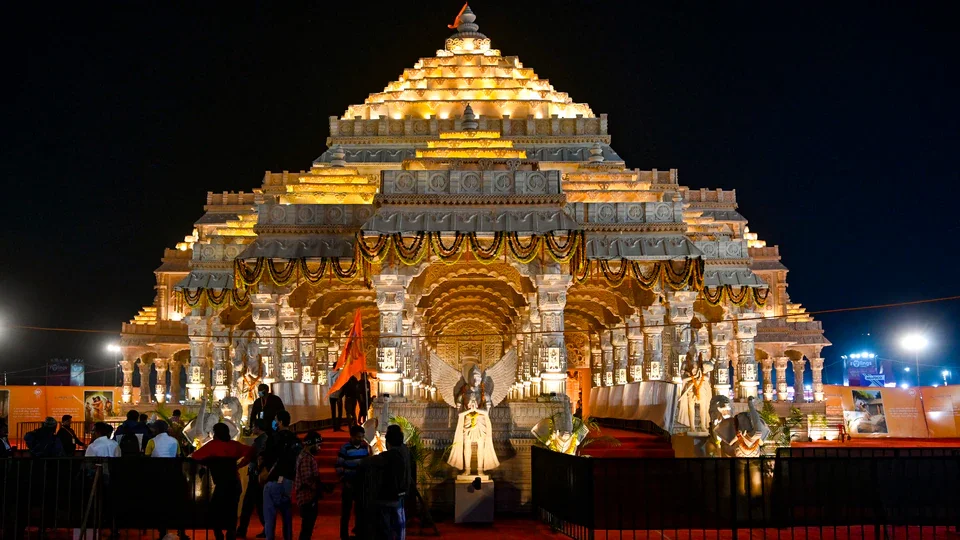
Thus the centuries of struggle to Ayodhya came to end. With temple done with Pran Pratishta on 22 January 2024.