
How British Destroyed India’s Education System
The Forgotten Truth: Education in Pre-Colonial India
On January 28, 2023, an MP from the DMK, Andimuthu Raja, sparked a firestorm of controversy. During a speech, he stated:
“Credits should be given to the British for making education available to even the ordinary people, when it had been denied for 3,000 years. Christianity was the first religion in the world to accept that common people in this society should have access to education.”
These statements ignited a fierce debate. But was he right? Was education truly a gatekept privilege for a tiny elite until the British arrived?
Common modern narratives suggest that education was reserved strictly for the Brahmin caste while others were denied the right to learn.
However, the historical record tells a different story, one that shatters many previously held beliefs about pre-colonial India. Our journey into the truth relies on early surveys conducted by the British between 1822 and 1930, as well as the extensive work of historian Dharampal in his seminal book, The Beautiful Tree
The Landscape of Indigenous Education
Before the British centralized the system, education in India was decentralized and organic. It was carried out through an extensive network of Pathshalas, Gurukulas, and Madrasas.
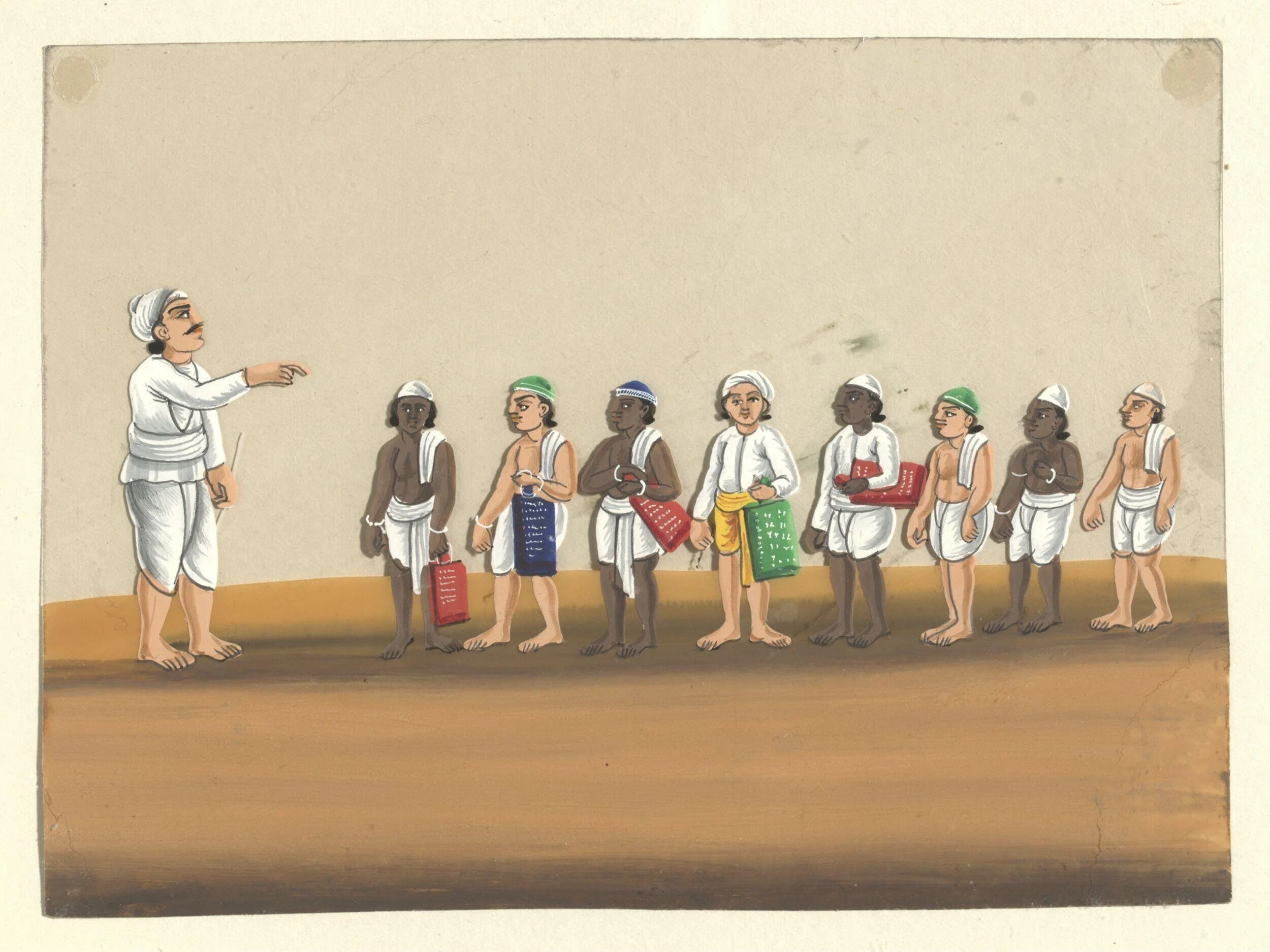
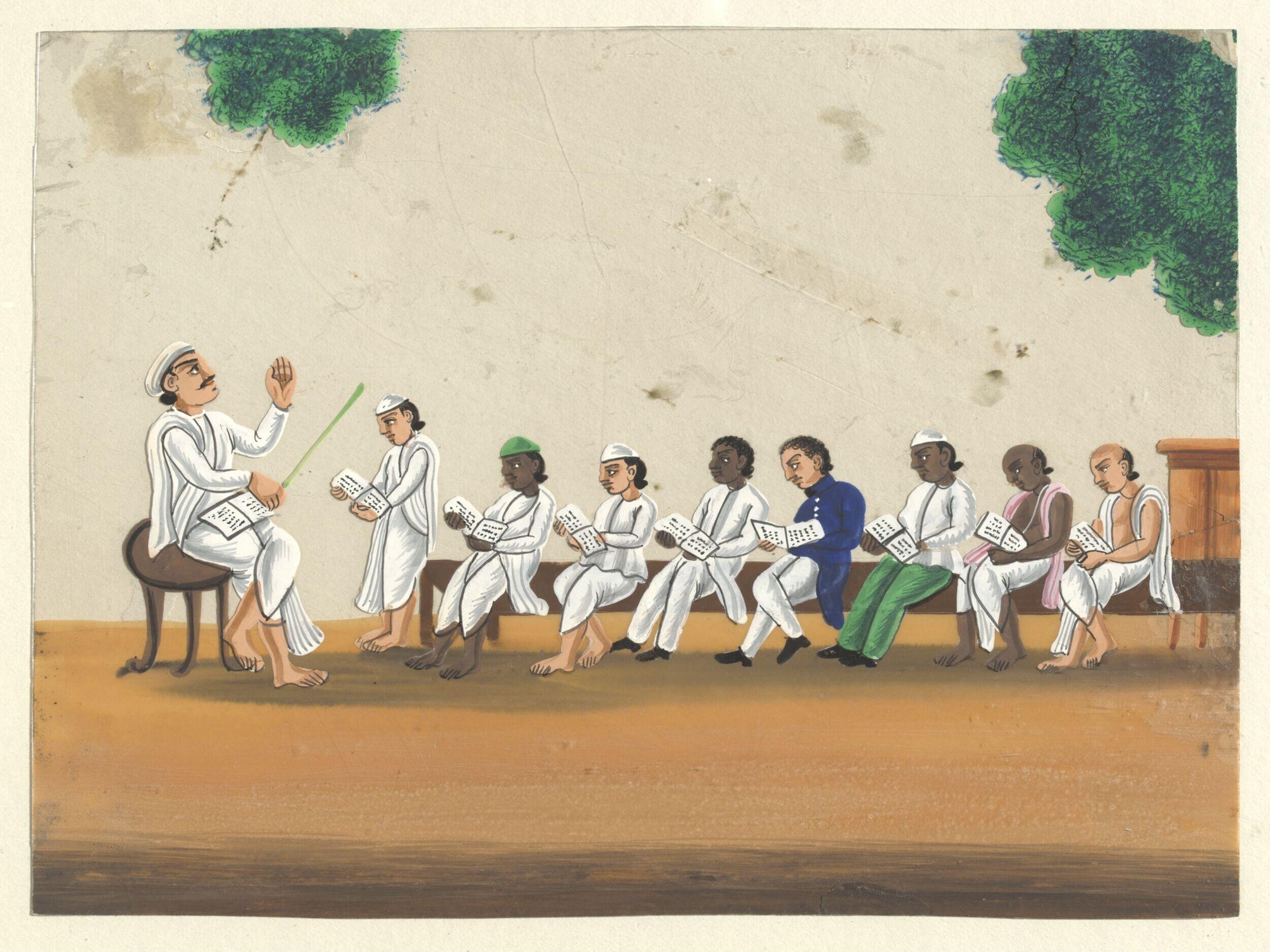
A Company Style Painting Depicting Pathshalas(Victoria and Albert Museum, Maplin Publishing)
The Pathshalas (Schools)
Pathshalas were typically held in local temples, the houses of respected villagers, or dedicated community buildings.
The Caste Myth: While many teachers were from the Kayastha (scribe), Brahmin, or Aguri castes, teachers came from nearly all sections of society, including Dalits. While demographics varied by district, there was a broad acceptance of teachers from diverse backgrounds. Remarkably, British records show that parents of "upper-caste" students did not hesitate to send their children to learn from teachers of lower castes, Dalits, or Muslims.
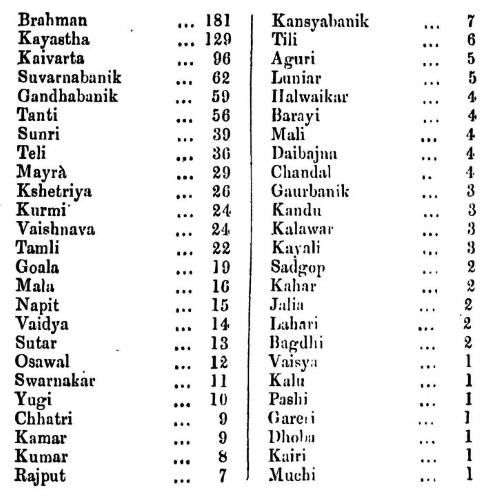
Total scholars in murshidabad, Bengal
In these classrooms, students were judged on merit. A Brahmin student sat alongside his peers, and all competed on equal footing. Reverend Robertson, observing a school in Burdwan, Bengal (1818), noted that students from different schools underwent monthly exams where the top students would challenge one another, regardless of their social standing.
Interestingly, of the 674 Dalit scholars in Burdwan at the time, 87% were enrolled in these native schools, while only 13% attended missionary schools.
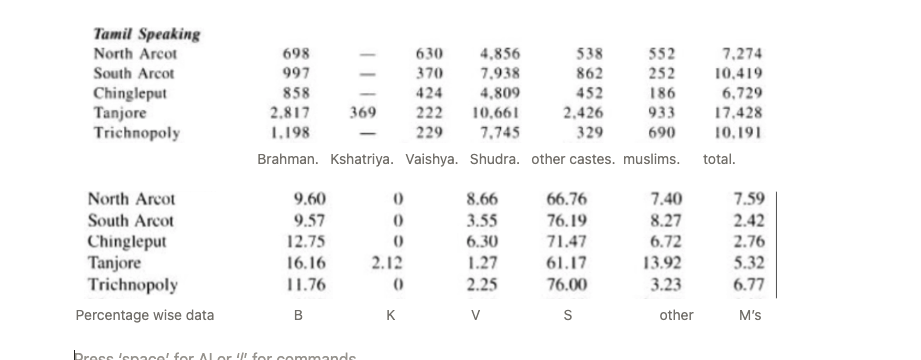
Here are some examples: No. of students from different castes in these districts, data is from the 1822-25 survey madras presidency, For e.x: In districts like Trichy and Coimbatore, the percentage of Shudras was as high as 76% and 78%
The Curriculum: The Four Stages
Elementary education was structured into four distinct stages:
Stage 1: Learning the alphabet of the local language (usually under 10 days).
Stage 2: Reading, writing, and basic arithmetic for land and weight calculations, using palm leaves (2.5 to 4 years).
Stage 3: Advanced arithmetic and writing on plantain leaves (2 to 3 years).
Stage 4: Writing on paper. Students read texts like the Ramayana and learned professional skills like bookkeeping, letter writing, and drafting petitions (up to 2 years).
Schools typically ran from 6:00 AM until sunset. Students usually entered between ages 5 and 8 and graduated as proficient young adults between 13 and 16.
Linguistic Harmony
The surveys show a remarkable level of linguistic diversity. In Bellary (Northern Karnataka), for example, the ecosystem included:
| School Type | Count |
|---|---|
| Kannada | 235 |
| Telugu | 226 |
| Marathi | 23 |
| Persian | 21 |
| Sanskrit Colleges | 23 |
This suggests a "beautiful tree" of coexistence between regional vernaculars and Sanskrit, which acted as the lingua franca for higher learning and governance, much like English does today.
Higher Education: The Colleges (Vidyapeeths)
Higher education was imparted in colleges often built of clay, where teachers and students lived together. If a student lacked the means, they would seek out a teacher willing to provide food, lodging, and knowledge in exchange for service or future promise.
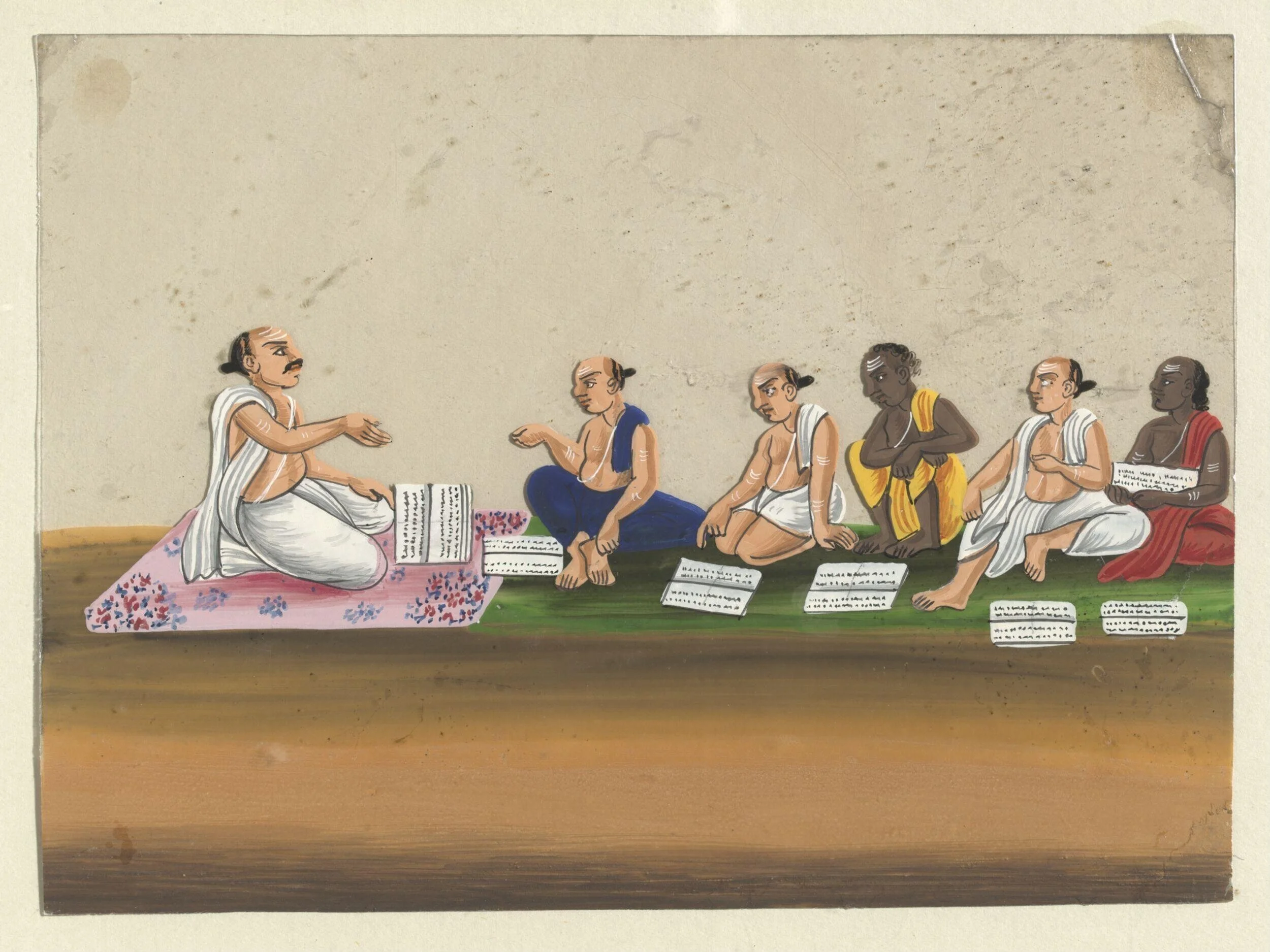
A Sanskrit Vidyapeeths
Subjects taught included:
Medicine and Law
Astronomy and Mathematics
Grammar and Astrology
Philosophy (Mimamsa, Vedanta, Sankhya)
To gain specialized knowledge, students traveled to academic hubs like Navadveepam or Varanasi.
Indigenous Medical Practitioners
Before British rule significantly disrupted the system, medical science and surgery were widely taught and practiced across India by individuals from a diverse range of castes, rather than being restricted to the upper strata of society. For example, data from Malabar revealed that out of 194 students studying medicine, only 31 were Brahmins. British medical men even acknowledged that barbers were among the best at performing surgery. Villages possessed a robust and diverse network of health workers; a survey of just one area, the Nattore Thana, recorded 123 general medical practitioners, 205 village doctors, 21 smallpox inoculators using traditional Indian methods, and 297 midwives.
Under British rule, these traditional medical practitioners experienced a severe decline, primarily due to systematic financial starvation and ideological contempt
Despite the withdrawal of state and financial support for indigenous medical practitioners, later surveys in the 1830s by figures like William Adam and Dr. Buchanan showed that varied classes of native practitioners still attempted to serve the population, though often in diminished capacities. These included:
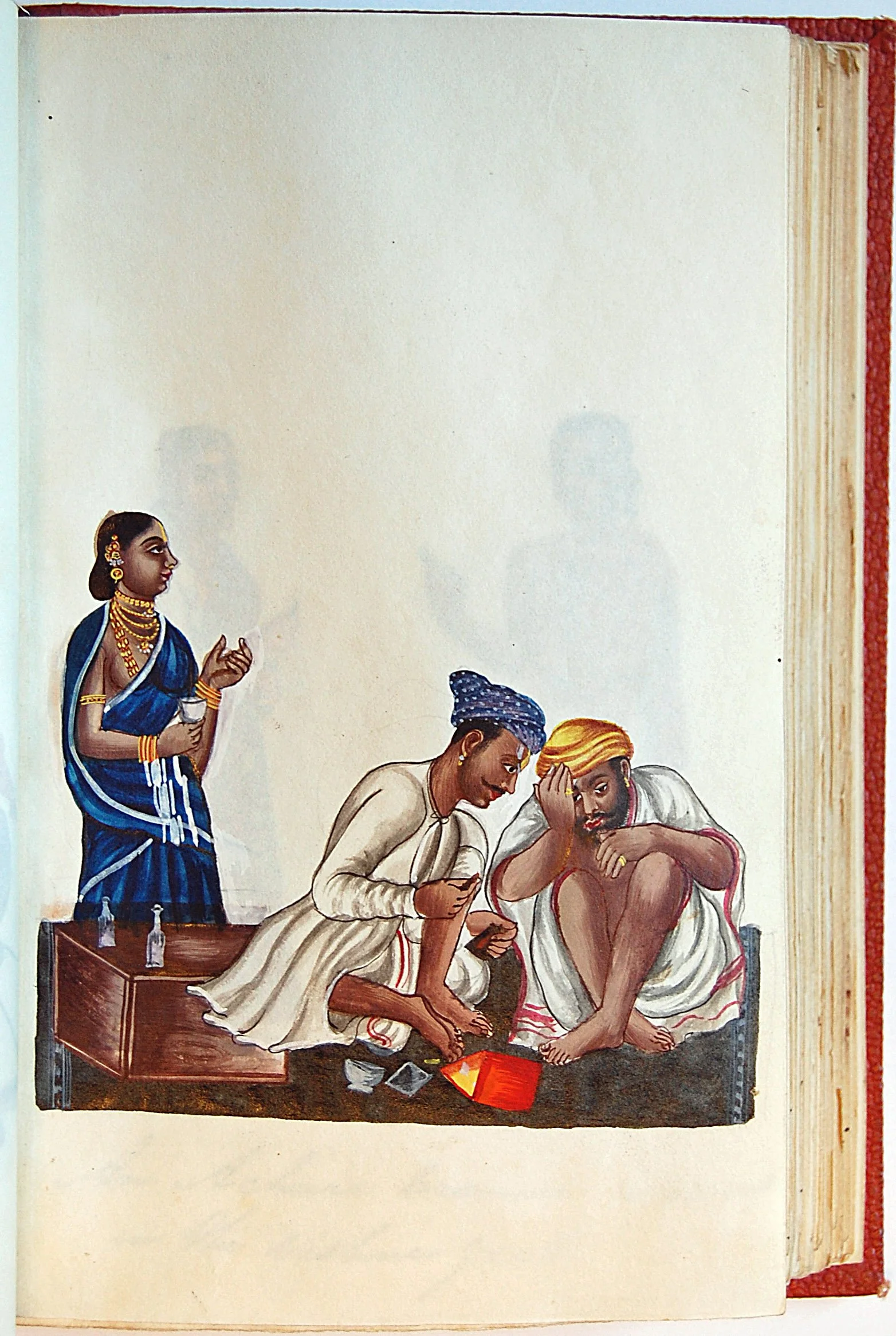
General Practitioners: Some were educated Hindu and Mahomedan (muslim) physicians who diagnosed and prescribed treatments, including both vegetable and mineral medicines based on standard Sanskrit medical texts or their vernacular translations.
Village Doctors: Many lacked formal medical knowledge and relied on simple vegetable preparations combined with incantations.
Inoculators and Midwives: There were dedicated smallpox inoculators who practiced the traditional manual art of inoculation, as well as hundreds of women-midwives, as men never practiced midwifery in the country.
Surgeons: While surgery was claimed by British writers like Mill to be unknown, practitioners still existed, such as an old woman reputed for successfully extracting bladder stones "after the manner of the ancients"
Religious Inclusivity
The Muslim community maintained Maktabs (elementary) and Madrasas (higher learning). G.W. Leitner noted that in Punjab before colonialism, "there was not a mosque, temple, or dharamsala without a school attached to it."
British official G.L. Prendergast remarked that there was hardly a village in the territory without at least one school. William Adam, after traveling through Bengal and Bihar, estimated there were roughly 100,000 schools for 150,748 villages—nearly one school for every 1.5 villages.
The Status of Women
While basic education was widespread among men, formal schooling for women was less common and often restricted to private tuition at home. However, exceptions existed; for instance, "dancing girls" (devadasis) were often highly educated and performed professional work usually reserved for men.
The Great Decline: How the Tree Withered
How did such a massive, grassroots network disappear? The answer lies in the British shift toward centralization.
The Funding Model: Native schools were funded by the community. Local rulers, merchants, and even illiterate peasants contributed a portion of their produce or revenue to the local teacher. Teachers were often granted tax-free land.
The Colonial Disruption:
Revenue Extraction: The British centralized tax collection. The "excess" revenue that once stayed in the village to fund the school was now diverted to the British treasury.
Neglect: The British ignored indigenous schools, redirecting resources toward English-medium and missionary education.
Impoverishment: As the traditional funding flow dried up, schools were forced to charge higher fees. The poorer sections and "lower" castes could no longer afford to send their children, leading to a sharp decline in literacy among those groups.
Conclusion
Contrary to A. Raja’s claims, pre-colonial India was likely more educated than contemporary England. While education in the West was often a privilege of the wealthy elite, India possessed a vibrant, decentralized, and inclusive system at the village level.
The British did not "bring" education to India; rather, their administrative and economic policies were the primary cause of its tragic decline. The "Beautiful Tree" was not planted by the colonialists, it was uprooted by them.