
How a "Prostitute Caste" Lie Justified Brothel Slavery in British India
The Unseen Crisis: Three Million People and a Toxic Lie
In the late 19th century, the British Army in India faced a crisis that threatened its operational effectiveness. By 1891, a staggering 25% of British soldiers were suffering from Sexually Transmitted Diseases (STDs).
The official solution—disguised under the Contagious Diseases Act—was a brutal, government-regulated system of prostitution operating within military cantonments. Officials conveniently blamed the crisis on the supposed "lax morals" of Indian women and the existence of a fabricated "prostitute caste."
However, when two brave British women arrived to investigate, they uncovered a horror: a colonial state-sponsored prostitution racket that enslaved, trafficked, and ruthlessly exploited young Indian women, some as young as 14, to ensure the health and morale of the common British soldier.
This is the story of how class, race, and Victorian hypocrisy led the British Raj to create a system of institutionalized sex slavery.
The British Soldier: From "Scum of the Earth" to Colonial Master
To understand why the colonial state created this system, we must look at the soldiers themselves and the strict class hierarchy of Victorian Britain:
The Tommy’s Class Divide
The Rank and File ("The Tommy"): The average British soldier in India came from the working poor—rural laborers, industrial workers, or the unemployed. They enlisted out of poverty, debt, or desperation. Their pay was low, discipline was harsh, and social mobility was nonexistent. In Britain, they were often stigmatized as the "scum of the earth."
The documentary version runs ten minutes: the garrison disease numbers, the licensed Chakla system the Raj ran while claiming to civilize, and the women trapped inside it.
The Officer Class: Officers were exclusively drawn from the aristocracy and landed gentry. They maintained separate social spheres, looked down upon the rank and file, and had access to high-class social relationships.
The Need for "Licensed Vice"
Ordinary soldiers were strongly discouraged from bringing wives to India due to cost. Military authorities, driven by Victorian morality, feared that repressed desire would lead to increased homosexuality or, worse, sexual aggression toward "High Born" aristocratic British women.
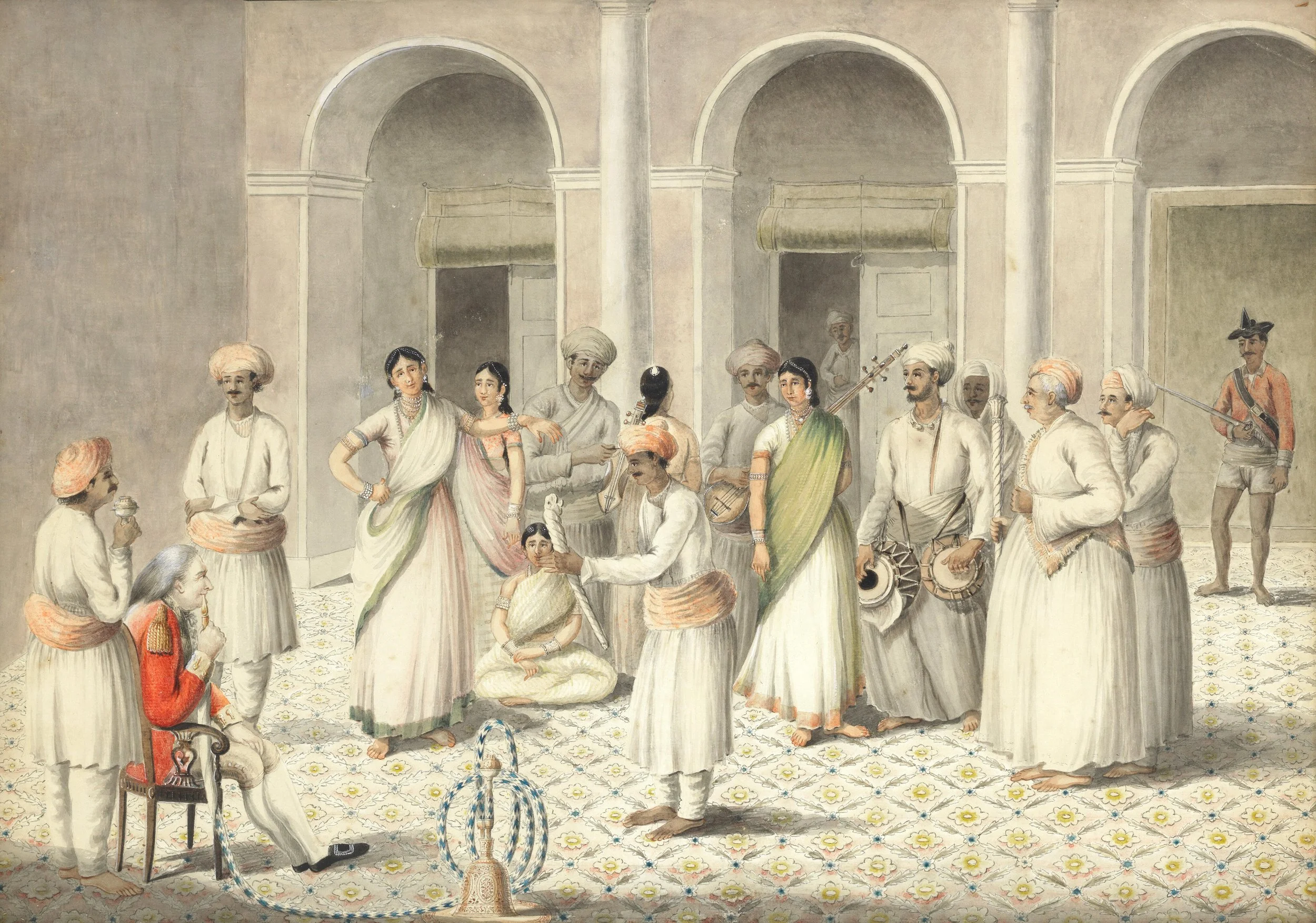
Captain Lyons of the Bengal Infantry, seated smoking a hookah, enjoying the performance of nautch girls
Law and medicine were weaponized to enforce this Victorian solution: the systematic forced enslavement of thousands of Indian women to serve the soldier's "unavoidable" needs.
The Cantonment System: Military Law and Sexual Slavery
The British carved out self-contained military towns called Cantonments across India. Within these areas, the military created government-regulated brothels known as Chaklas. The 25% hospitalization rate among European troops severely reduced the army's combat readiness & high medical cost. The solution was state-regulated prostitution, which was cheaper than increasing the number of soldiers' wives.
Indigenous Indian troops consistently showed far lower STD rates (only 5.4% venereal admission) than Europeans, a fact British officials could not explain, so they claimed Natives to be immune due to repeated infection (which is not medically correct reason) choosing instead to blame the "lax native morals" of India for tempting their young men.
Enslavement via Price
Women in the Chaklas were only allowed to serve British soldiers. The price for their services was fixed by military officials at a mere 4 annas per visit, ensuring the service was cheap enough for soldiers to never miss an opportunity—a rate that acted as a debt trap for the women. The income earned was barely enough for women to sustain the livelihood after paying fines, rent and other living cost, she barely had enough for herself.
Recruitment and The Debt Trap of the Chaklas
The women who ended up in the Chaklas were not willing participants; they were victims of sexual enslavement enforced by the colonial state. Cantonment magistrates paid agents (Mahaldarnis) to procure women, often demanding "a very young, attractive girl."
Methods included:
Deception and false promises of employment.
Coercion and outright kidnapping by police going into poor villages.
Exploitation during famines (as late as WWII in Bengal) where women had no other means of survival.
The Bondage of the Lock Hospital: The core mechanism of enslavement was the mandatory, weekly, indecent genital examination at the Lock Hospital.
Unequal Enforcement: These strict, humiliating restraints were enforced only on local women to ensure their bodies were disease-free for the soldiers. British soldiers were rarely subjected to regular checks, citing "reduction of morale."
Punishment: If diagnosed with an STD, women were forcibly detained in the hospital (treated like a jail) until cured. If deemed "unfit to practise prostitution" or if they tried to escape, they were fined, imprisoned for up to 7 years for "Contempt of Court," or kicked out to starve, often hundreds of miles from home with their British-born children.
Financial Slavery: Fines and the impossibly low fixed price of 4 annas per visit ensured the women could never accumulate savings, keeping them in perpetual debt bondage to the authorities.
The Aftermath: How Two American Women Exposed the Lie
The system was maintained by the blatant lie that the women belonged to a "prostitute caste." In reality, they were drawn from Hindus of all castes, Arabs, Afghans, and even Jews.
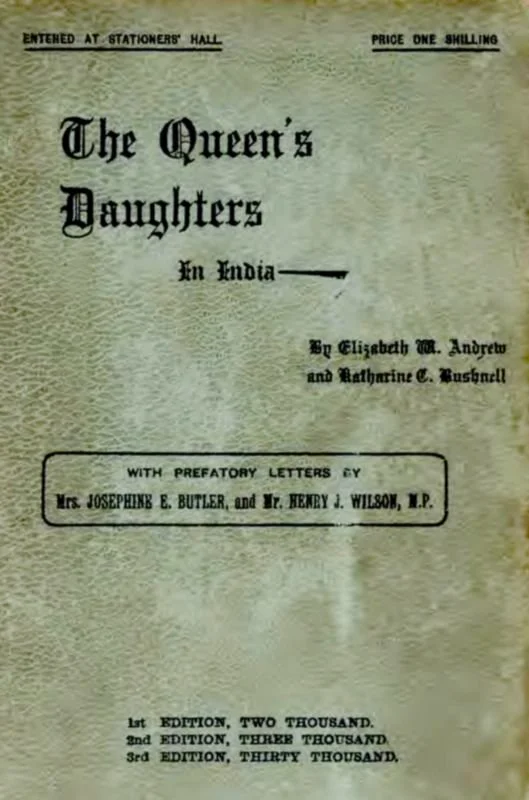
Cover of The Queen’s Daughters
in India BY ELIZABETH W. ANDREW and KATHARINE C. BUSHNELL
In 1891, two American investigators exposed that despite a House of Commons resolution to repeal compulsory examinations (the Contagious Disease Act), the practice was still being enforced secretly under the Cantonments Act of 1889.
Their evidence led to the Cantonments Act Amendment Act of 1895, a major win that officially banned the compulsory examination of women for STDs.
However, fueled by exaggerated disease statistics and the influence of British aristocratic women who argued the state had a duty to protect their sons, the Indian Government repealed the 1895 amendment in 1897, restoring the system of "brothel slavery."
The practice, driven by British class concerns and racial superiority, continued in various forms until the British left India. It stands as a chilling example of how the colonial state used sex as a central political mechanism to control both its troops and its subject population.